Showing posts with label beliefs. Show all posts

Thursday, 22 October 2020

REMINISCENCES: Of Legal Eagles and Culture Vultures


The great majority of visitors to wildlife reserves are watchers of large mammals, especially so the celebrated carnivores, the pachyderms and the large or rare antelope. A much smaller subset of wildlife enthusiasts is comprised of the birdwatchers who take delight in even the smallest and drabbest of the feathered folk. The birders often spend many minutes (or even hours) deciphering the minutest of differences in plumage or behaviour in order to identify the correct species to which an LBJ (little brown job) belongs. Encountered even less often are the tree-and-flower-watchers – they do exist, and it is very worthwhile spending some time in their company. An awareness and appreciation of the splendour of the flora will enrich any trip into the wilderness.

While it is accurate to claim that mammal-watchers outnumber birdwatchers and other enthusiasts by a substantial amount, it would only be fair to add that mammal-watchers occasionally do stop for a sighting of a bird – provided that the bird is large and spectacular, such as a Southern Ground-Hornbill or a species of stork or heron.


This image is Copyrighted © Berndt Weissenbacher/BeKaHaWe. If you like it, you may share this image as presented here under a Creative Commons Attribution-NonCommercial-NoDerivs 3.0 License (CC BY-NC-ND 3.0). NO OTHER USE OF THIS IMAGE is permitted without the express consent of the photographer.


Two categories of birds, particularly, will halt the peregrinations of any mammal-watchers through a park: the eagles and the vultures. Both kinds are very photogenic – they are large and have immense wingspans so that they are spied without difficulty and can be photographed over quite long distances. Furthermore, they can be followed quite effortlessly if they are spooked. They also occupy large ranges in a reserve – they can be encountered repeatedly on separate occasions. Their habit of soaring at some altitude also allows visitors to spot them often, especially when vultures circle above a recent kill or eagles patrol their territories.


This image is Copyrighted © Berndt Weissenbacher/BeKaHaWe. If you like it, you may share this image as presented here under a Creative Commons Attribution-NonCommercial-NoDerivs 3.0 License (CC BY-NC-ND 3.0). NO OTHER USE OF THIS IMAGE is permitted without the express consent of the photographer.


Throughout human history, the eagles have managed their public relations splendidly well. We consider them as formidable hunters, powerful in the air and on the ground in equal measure. Their posture signals confidence, competence and intelligence. To us, they are majestic, so much so, that they are portrayed on the national flags of several nations (Zambia, Zimbabwe, Egypt, Mexico, Albania, and Serbia, for example). Various species of eagle are also the national bird of a host of countries (such as the United States, Germany, Scotland, Serbia, Albania, Mexico, Panama, Indonesia and the Philippines, while the African Fish-Eagle is the national bird of Namibia, Zambia and Zimbabwe).


This image is Copyrighted © Berndt Weissenbacher/BeKaHaWe. If you like it, you may share this image as presented here under a Creative Commons Attribution-NonCommercial-NoDerivs 3.0 License (CC BY-NC-ND 3.0). NO OTHER USE OF THIS IMAGE is permitted without the express consent of the photographer.


In heraldry, the eagle represents fortitude and action. Eagles appear on the ensigns and crests of countless individuals, families, associations and villages, towns and cities, amongst others. The eagle has always been used as a significant symbol – think of the emblem of the Roman Empire with its imperial Aquila, or think of Saint John the Evangelist, the most lofty and prophetic of the four evangelists of the bible.

The classical literature of the antiquity of western civilisation abounds with accolades for the eagle. Frequently, the eagle is described as the king of birds. In the Iliad, Homer considers the eagle as the most perfect of birds – certainly sent by Zeus as an omen. Following the Iliad and Odyssey, later Greek and Latin writers commonly cite eagle omens.


This image is Copyrighted © Berndt Weissenbacher/BeKaHaWe. If you like it, you may share this image as presented here under a Creative Commons Attribution-NonCommercial-NoDerivs 3.0 License (CC BY-NC-ND 3.0). NO OTHER USE OF THIS IMAGE is permitted without the express consent of the photographer.


Often, the collective noun that is used for a group of eagles is ‘a convocation’ with its connotations of formality and purpose. We speak of excellent game-spotters as being ‘eagle-eyed’, while a person well versed in the law is called a ‘legal eagle’. All in all, the eagles have captured our human imagination; they have even won our respect.


This image is Copyrighted © Berndt Weissenbacher/BeKaHaWe. If you like it, you may share this image as presented here under a Creative Commons Attribution-NonCommercial-NoDerivs 3.0 License (CC BY-NC-ND 3.0). NO OTHER USE OF THIS IMAGE is permitted without the express consent of the photographer.


In general, the same can not be said about vultures. Their reputation is lacklustre at best; at worst, their penchant for carrion has ensured labels such as soiled, polluted, foul, foetid and quarrelsome. Moreover, they are often perceived as being rather comical. If vultures were smaller, I doubt that an average visitor to the wilderness would bother taking a look.


This image is Copyrighted © Berndt Weissenbacher/BeKaHaWe. If you like it, you may share this image as presented here under a Creative Commons Attribution-NonCommercial-NoDerivs 3.0 License (CC BY-NC-ND 3.0). NO OTHER USE OF THIS IMAGE is permitted without the express consent of the photographer.


Only a single Old World vulture* is elevated to the status of a national bird – in Serbia, both the eagle and the vulture share this illustrious nomination. In heraldry, the vulture represents rapacity, but it is chosen only very rarely as a symbol on important crests and insignia. Generally, vultures are given a bad press. A large group of these birds circling at altitude is referred to as a ‘kettle’; the company of several vultures on a kill is called a ‘wake’ – at least, so say the ‘culture vultures’.


This image is Copyrighted © Berndt Weissenbacher/BeKaHaWe. If you like it, you may share this image as presented here under a Creative Commons Attribution-NonCommercial-NoDerivs 3.0 License (CC BY-NC-ND 3.0). NO OTHER USE OF THIS IMAGE is permitted without the express consent of the photographer.


Classical Greek literature is often unclear about the kind of large, predatory bird to which an author refers. In many instances, the bird could have been a vulture or an eagle. The ‘winged hound’ that Zeus sent to torment Prometheus may have been a vulture. The harpies too suggest a more vulturine disposition – they were incarnations of the gales of tempests and possessed the body of a great predatory bird, with the head and breasts of a young woman, whose hands ended in long, razor-sharp talons. Indeed, Ovid described them as human-vultures, brutal, ferocious and forbidding agents of punishment.

The only ‘vulture’ that seems to have escaped the disdain that is ingrained in ‘western culture’ for this group of birds is the Andean condor (a New World vulture*, quite different from the Old World vultures). The Andean condor is the only vulture depicted on the flag of a single Andean nation – Ecuador. However, the Andean condor does perch proudly on the coats of arms of Ecuador and several other South American states, including Argentina, Peru and Venezuela. The Andean condor also fares better as a national bird (namely of Ecuador, Chile, Colombia and Bolivia).

In the ancient civilisations of the Andean region of South America, the condor shouldered an important role in mythology and folklore. The mythology of various Andean cultures associated the condor with the sun-god – thus the Andean condor was regarded as a quasi-deity who was the potentate of the upper realm. Many Andean cultures revered this huge bird as a symbol of power and health – purportedly the bones and organs of the Andean condor retained medicinal powers. Sadly, to this day still, the rare Andean condor is hunted for the supposed curative benefits of parts of its body.


This image is Copyrighted © Berndt Weissenbacher/BeKaHaWe. If you like it, you may share this image as presented here under a Creative Commons Attribution-NonCommercial-NoDerivs 3.0 License (CC BY-NC-ND 3.0). NO OTHER USE OF THIS IMAGE is permitted without the express consent of the photographer.


In several African cultures, vultures too are imbued with some positive attributes. Particularly in some South African cultures, such as the amaZulu, vultures are hunted, killed and traded as umuthi (traditional medicine). Particularly the heads of vultures are claimed to confer powers of clairvoyance, foresight and amplified intellect.

Both eagles and vultures are worthy of our attention (as are all species that still survive despite our misguided, rapacious exploitation of the planet and its inhabitants). Both are inexhaustibly intriguing in their structure, abilities and behaviour. Rightfully, both groups attract the attention even of non-birders.


This image is Copyrighted © Berndt Weissenbacher/BeKaHaWe. If you like it, you may share this image as presented here under a Creative Commons Attribution-NonCommercial-NoDerivs 3.0 License (CC BY-NC-ND 3.0). NO OTHER USE OF THIS IMAGE is permitted without the express consent of the photographer.


Nevertheless, when we sing the praises of any humans or animals, it is just also to point out those moments in the lives of the performers that do not reflect glamorously on their prowess. A fair consideration of their lives must also include those times when they are not in full control of their look or their actions, when things go wrong, when they are not magnificent or resplendent. On several occasions, I have had the good fortune to witness instances of the appearance and behaviour of both eagles and vultures that have brought forth more than a brief giggle. These are large birds – their size (as it does in myself and other humans too) often betrays their attempts to appear regal, majestic, fierce.


This image is Copyrighted © Berndt Weissenbacher/BeKaHaWe. If you like it, you may share this image as presented here under a Creative Commons Attribution-NonCommercial-NoDerivs 3.0 License (CC BY-NC-ND 3.0). NO OTHER USE OF THIS IMAGE is permitted without the express consent of the photographer.


*   The general term ‘vulture’ applies to large birds that principally scavenge their food from animal cadavers. Importantly, the deleterious, disease-causing bacteria present in carrion do not harm ‘vultures’ – in fact, these bacteria (otherwise very harmful to the majority of vertebrates) flourish in the intestines of these large scavenging birds.

A characteristic of the plumage of many vulture species leaves their heads (and often their necks too) covered only by very small down feathers. Consequently, these parts often appear naked or only very sparsely feathered. This lack of large feathers promotes convective heat loss from the exposed skin of the head (and neck) of vultures – heat loss that is vital since these birds often feed on carcasses at or near midday, exposed to blazing sunlight.

Old World vultures live on the continents of Africa, Asia and Europe, while the New World vultures and condors today exist in central and South America. Interestingly, Old World vultures find carcasses exclusively by sight, whereas some species of New World vulture have a good sense of smell.

While the phylogenetic relationships of ‘vultures’ and birds of prey is in flux and await further, detailed research to discombobulate the ancestral relationships between several groups of these avian predators. What has been discovered is that Old World vultures are not closely related genetically to the outwardly similar New World vultures and condors. The similarities of form and habit shared by the two groups of vultures are due to convergent evolution (that is, adaptation to the demands and challenges of very similar life-histories), rather than stemming from an inheritance of a set of adaptations from a recent common ancestor.

Recent research seems to indicate that the Old World vultures are most closely related to the eagles, buzzards, kites and hawks. This large group of predatory birds shares a common ancestor with the New World vultures and condors, and both groups together then share a more distant common ancestor with all falcons.

Saturday, 15 August 2020

VISUAL CONNOTATIONS: II – The Elephant in the Wood


The human brain is essentially a pattern recognition device. Pattern recognition is based fundamentally on the detection by the neural system of ‘similarity’ and ‘difference’ in the patterns of stimulation received by the prefrontal cortex of the brain. The system of pattern recognition does not require conscious awareness. However, unless pattern recognition is linked directly to a reflex response, it does imply that a prior observation of a significant pattern exists as stored information in the mind of an observer to which a ‘new’ pattern can be compared.
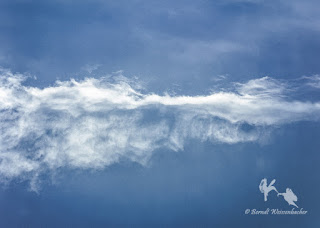

This image is Copyrighted © Berndt Weissenbacher/BeKaHaWe. If you like it, you may share this image as presented here under a Creative Commons Attribution-NonCommercial-NoDerivs 3.0 License (CC BY-NC-ND 3.0). NO OTHER USE OF THIS IMAGE is permitted without the express consent of the photographer.


The ability to be sensitive to your surroundings (and to the state of your internal environment), the ability to sense in general, is based on pattern recognition. Sensitivity always results in an ‘if… then’ situation. Pattern recognition and sensitivity in general are also based on context; ‘if this occurs…, I last found that…’ The response to the stimulation, either ‘for’ or ‘against’ the input, is based on reflex action or on cognition and its concomitant interpretation by the brain. From the outset, sensitivity in organisms has allowed the evolution of simple forms of navigation through a hazardous environment and escape behaviours, for example.
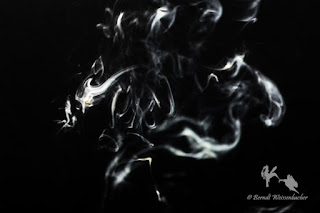
 

This image is Copyrighted © Berndt Weissenbacher/BeKaHaWe. If you like it, you may share this image as presented here under a Creative Commons Attribution-NonCommercial-NoDerivs 3.0 License (CC BY-NC-ND 3.0). NO OTHER USE OF THIS IMAGE is permitted without the express consent of the photographer.


With the evolution of more complex brains comes more complex analysis of the sensory input – this results in pattern processing, recognition and even pattern synthesis within the brain. Learning of significant patterns and memory of the patterns is also increased greatly. One example of this ability by complex brains is the formation of search images of their prey within the brains of many predator species. By first learning and subsequently recognising specific clues present in the shape, colouration and behaviour of common prey species, many predators are able to increase significantly their ability to spot and hunt cryptic prey. However, by focussing on one prey motif too narrowly, the predator will become worse at spotting other types of prey. This phenomenon of using pattern recognition – matching an observed pattern of a specific prey item with a learned pattern recalled from memory – is referred to as a predator having formed a search image for a certain prey species.
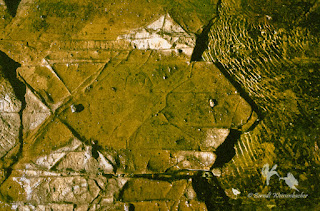

This image is Copyrighted © Berndt Weissenbacher/BeKaHaWe. If you like it, you may share this image as presented here under a Creative Commons Attribution-NonCommercial-NoDerivs 3.0 License (CC BY-NC-ND 3.0). NO OTHER USE OF THIS IMAGE is permitted without the express consent of the photographer.


With ‘consciousness’ come decision-taking, reasoning, abstract thought and language, intelligence, invention, imagination, the pondering over the significance of patterns and communication of and about patterns. It is likely that all of these most human abilities are based in very large part on the enhanced pattern processing skills of the human brain (more specifically of the expanded prefrontal cortex present in humans).
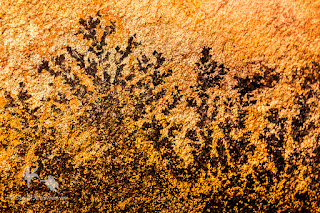
 

This image is Copyrighted © Berndt Weissenbacher/BeKaHaWe. If you like it, you may share this image as presented here under a Creative Commons Attribution-NonCommercial-NoDerivs 3.0 License (CC BY-NC-ND 3.0). NO OTHER USE OF THIS IMAGE is permitted without the express consent of the photographer.


As humans, we literally ‘picture’ reality inside of our minds. With language and sound (again based on pattern recognition), we hear our thoughts, we hum a tune silently, we converse with ‘our selves’ and others in our minds. With our expanded prefrontal cortex, superb pattern processing and pattern recognition skills allow humans to encode and integrate perceived patterns. Moreover, we are able to transfer such patterns to other individuals via description (using language) and by depiction in the visual arts. We not only perceive patterns; we also fabricate patterns within our minds. All patterns, perceived or imagined, are reinforced by familiarity, emotional experiences, learning, instruction (and even indoctrination). Our emotions (love, pleasure, anger, fear, for example) are all heightened states of stimulation. Emotional arousal enhances the memory and recall from memory of events that have occurred during those particular episodes of emotional experience. Pattern processing too is heightened by perception of patterns in an emotional setting.
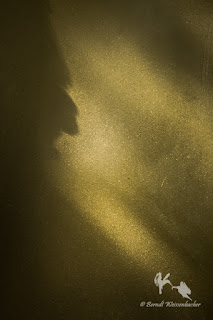
 

This image is Copyrighted © Berndt Weissenbacher/BeKaHaWe. If you like it, you may share this image as presented here under a Creative Commons Attribution-NonCommercial-NoDerivs 3.0 License (CC BY-NC-ND 3.0). NO OTHER USE OF THIS IMAGE is permitted without the express consent of the photographer.


Given a human mind’s phenomenal ability to process and recognise patterns, it should come as no surprise then that humans, with their imagination and inventiveness, will actively seek out and identify patterns in their environment. However, not all of the discoverable patterns necessarily carry any significance or meaning. Often, patterns are detected that may at first seem meaningful (such as ‘seeing’ a friend in a crowd of complete strangers); however, on further analysis, interpretation and reflection, the pattern is not what it seemed to be at first. The significance, the meaningfulness of the pattern, has evaporated upon the realisation that we are experiencing a misrepresentation. Similarly, identifying animal or human figures in clouds, as star signs in the heavens, as the rabbit in the moon (as examples), all are instances of the pattern recognition system in our minds imbuing erroneous meaning to otherwise misrepresented and misidentified patterns. Then again, our imagination (subjected to our personal convictions and beliefs) often simply ‘corrects’ current insignificant patterns and incorporates meaning or overrides non-meaning to give rise to a ‘true’ representation. Human history is replete with reported tales of visions.
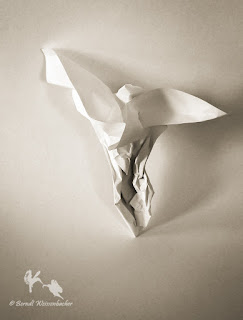

This image is Copyrighted © Berndt Weissenbacher/BeKaHaWe. If you like it, you may share this image as presented here under a Creative Commons Attribution-NonCommercial-NoDerivs 3.0 License (CC BY-NC-ND 3.0). NO OTHER USE OF THIS IMAGE is permitted without the express consent of the photographer.


Our cognitive ability to recognise patterns always includes detection of the pattern, a comparison or matching of the observed pattern with patterns that we have memorised (that is, patterns that we have experienced and learned before and can recall from our memory) and finally recognition (identification coupled with making meaning of the significance of the observed pattern). Thus misidentification can take place at three levels.


Perhaps the most obvious (and most easily understood) misrepresentations of reality arise from the perception of optical phenomena (such as the diffraction, dispersion, reflection and refraction of light). At the level of observation, we would have to add any inherent restrictions of our various sensory receptors and organs, such as the perception of after-images following intense stimulation of the photoreceptors and the presence of blind spots in the retinas of our eyes.
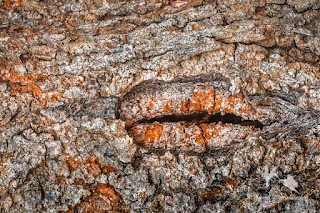
 

This image is Copyrighted © Berndt Weissenbacher/BeKaHaWe. If you like it, you may share this image as presented here under a Creative Commons Attribution-NonCommercial-NoDerivs 3.0 License (CC BY-NC-ND 3.0). NO OTHER USE OF THIS IMAGE is permitted without the express consent of the photographer.


The second level at which misidentification can and does take place involves the mechanisms in our cerebral cortices of pattern processing, analysis and the comparison of newly sensed patterns with memorised patterns. The new input, the pattern of stimulation being received by our brain, must be matched against existing prototypical or template patterns stored in our memories. The initial comparison and possible matching to recalled patterns may prove to be sufficient for accurate pattern recognition if there is congruence between the sensory input and the recall from memory. Alternatively, further analysis of finer detail in the observed pattern may reveal a correspondence of noteworthy features shared by the two patterns, rather than a matching of the coarser patterns overall.


This image is Copyrighted © Berndt Weissenbacher/BeKaHaWe. If you like it, you may share this image as presented here under a Creative Commons Attribution-NonCommercial-NoDerivs 3.0 License (CC BY-NC-ND 3.0). NO OTHER USE OF THIS IMAGE is permitted without the express consent of the photographer.


The final level at which misrepresentation during pattern recognition can take place involves the assigning of import or meaning to the observed pattern. It is at this level that our minds become easily influenced (even biased) by prior experience and learning, by memories and by our current emotional state. (Intoxication by a whole host of chemical substances plays havoc at this level as well.)


Nevertheless, in a ‘normal’ human brain, none of the misidentifications or misrepresentations that may arise at any one of the levels constitutes an error – none of these indicates a flaw in the pattern recognition system. Rather, in humans at least, the majority of such ‘mistakes’ are connected intimately to our cognition, our current reasoning, our hopes and beliefs, as well as our imagination.


This image is Copyrighted © Berndt Weissenbacher/BeKaHaWe. If you like it, you may share this image as presented here under a Creative Commons Attribution-NonCommercial-NoDerivs 3.0 License (CC BY-NC-ND 3.0). NO OTHER USE OF THIS IMAGE is permitted without the express consent of the photographer.


As a photographer and avid reader of literature, I prefer to use the term ‘connotation’ when dealing with photographs that can evoke misrecognition of patterns in the viewer’s mind.


In literature, a particular word may suggest an additional idea, significance or sentiment that need not be a part of the word’s original denotation or meaning. Such an additional suggested or implied meaning is referred to as a word’s ‘connotation’. In works of art, connotation will evoke in the audience an association or will hint at a relationship to some object or concept that is not represented directly in the artwork. Connotation, then, inspires, suggests, implies, implicates notions that hint at additional possibilities of significance and meaningfulness that are otherwise left unexpressed in the work of art itself.


This image is Copyrighted © Berndt Weissenbacher/BeKaHaWe. If you like it, you may share this image as presented here under a Creative Commons Attribution-NonCommercial-NoDerivs 3.0 License (CC BY-NC-ND 3.0). NO OTHER USE OF THIS IMAGE is permitted without the express consent of the photographer.


At a fundamental level, our enhanced human ability at and propensity for pattern recognition, together with our imagination and susceptibility to misrecognition of patterns, are precisely the phenomena that an artist will exploit during composition of an image. Composition involves the deliberate arrangement of visual elements to support and augment the subject (in the broadest sense) and the meaning assigned to it by the visual artist, while de-emphasising and negating the influence on our perception and the significance to our mind of the extraneous surroundings. Therefore, composition is the meticulous, intended manipulation by the artist of the pattern recognition abilities that all humans enjoy.


Tuesday, 21 July 2020

ABOUT THIS IMAGE... ‘Dance of the Spirit Guide’


One of my favourite photography destinations is Mokala National Park in the Northern Cape Province of South Africa. This photogenic environment with its great diversity of bushveld types and its large variety of geological formations (rante (ridges), kopjes (hills) and areas of deep sand) frequently also provides great sightings of eland.

Eland are magnificent animals. They are the largest of the antelope species – mature individuals, particularly the old bulls, are massive and the rivals of Cape buffaloes in terms of stature and power. Eland are animals that demand your attention and respect, even though they are nowhere near as belligerent as buffaloes or other big game species are.


This image is Copyrighted © Berndt Weissenbacher/BeKaHaWe. If you like it, you may share this image as presented here under a Creative Commons Attribution-NonCommercial-NoDerivs 3.0 License (CC BY-NC-ND 3.0). NO OTHER USE OF THIS IMAGE is permitted without the express consent of the photographer.


The aboriginal inhabitants of Southern Africa recognised this majestic quality of the eland. In San mythology, the Eland occupies a central role in the pantheon of quasi-deities – animals imbued with the power of spirits that can and do act as intermediaries between this world and the eternal, other world of the gods, spirits and ancestors. Indeed, Eland is one of the first and the favourite animal creation of Mantis (more correctly ǀKágge̥n), the demiurge and champion of the San.*

In the San rock art (of most districts of Southern Africa) the eland is depicted more frequently than any other animal species (including the smaller antelope species that were hunted much more often and that provided the San with their staple meat supply – antelope such as kudu, gemsbok, blue wildebeest, common duiker, for example). Moreover, the most elaborate artwork always shows eland, often in polychrome paintings (with many shades of white, ochre and red) and in detail almost never seen in the paintings of other animals. It is clear that to the San paintings of eland are not representations of the animal, the food source, alone; rather the paintings form an important aspect of San spirituality.

In all human societies and cultures, access to the world of the deities and spirits is barred for the majority of mere mortals. Only a few unique, ordained individuals have the necessary power and permission to act as intermediary, as messenger, between this and the other worlds. In ancient tribes, this role fell to the shaman, the medicine man/woman, the high priest/priestess, to name a few monikers of these select individuals.


This image is Copyrighted © Berndt Weissenbacher/BeKaHaWe. If you like it, you may share this image as presented here under a Creative Commons Attribution-NonCommercial-NoDerivs 3.0 License (CC BY-NC-ND 3.0). NO OTHER USE OF THIS IMAGE is permitted without the express consent of the photographer.


Probably the most important and significant ritual in San spiritual life involves the ‘great dance’. The great dance is often performed at or near new moon (when the nights are at their darkest) or after a successful hunt of a large and significant animal (like eland, giraffe, kudu and hartebeest). During this ritual, the women of the clan are seated in a large circle around a roaring fire. They sing and clap their hands rhythmically and repetitively. Within the circle, one or more shamans (men and women) lead the circular dance of the men. The dance starts more slowly, with the feet of the dancers stamping the ground hard to the rhythm of the ‘music’; then the dance becomes more and more energetic, with the dancers often mimicking the behaviour and antics of animals. The dance activates the supernatural power of the dead animal – for the San, the eland possess the greatest amount of potent energy. Within the circle illuminated by the light of the fire is the healing power of the shaman(s) and the activated potency of the dead eland (or other large animal); lurking in the dark of night beyond the firelight are the malevolent spirits of the dead who seek to harm the community and to cause sickness.

During the long, exhausting dance, the shaman enters a trance. In this state, the shaman harnesses the potent energy to embark on the perilous journey from this realm to the realm of the spirits and ancestors. In this ‘other’ world, the shaman performs various tasks that are important for the clan: communicating with deities and ancestors, interceding on behalf of the clan, healing of the sick, rainmaking and fighting off evil spirits that are threatening the life and security of the clan.


This image is Copyrighted © Berndt Weissenbacher/BeKaHaWe. If you like it, you may share this image as presented here under a Creative Commons Attribution-NonCommercial-NoDerivs 3.0 License (CC BY-NC-ND 3.0). NO OTHER USE OF THIS IMAGE is permitted without the express consent of the photographer.


In the course of the trance, the shaman enters an altered state of consciousness. The visit to the supernatural real on behalf of the clan is accompanied by the experience of entoptic phenomena, such as the ‘seeing’ of bright geometric shapes (zigzags, grids, curved lines), patterns of bright dots of light and vortices of light. The shaman will enter the spiritual realm by sliding down the vortices of light, by slipping through rotating tunnels or by entering holes or caves. On the journey, the shaman will be confronted by ‘monsters’ and by figures of animals with strong spiritual content.

The rock paintings of the San are religious iconography. The potency of the eland is revealed by the frequency of paintings of this species and the lavish care taken in its depiction. Amongst these magnificent paintings, there are depictions of the transformation of shamans themselves into eland (or other antelope). These paintings of standing therianthropes or kneeling ‘trance-buck’, paintings of humans blending and melding with antelope forms to varying degrees, hint at the transformation that the shaman experiences during trance.* *


This image is Copyrighted © Berndt Weissenbacher/BeKaHaWe. If you like it, you may share this image as presented here under a Creative Commons Attribution-NonCommercial-NoDerivs 3.0 License (CC BY-NC-ND 3.0). NO OTHER USE OF THIS IMAGE is permitted without the express consent of the photographer.


It is not at all surprising that the eland is of utmost importance in San mythology – the most potent spiritual guide for the shaman. Eland is Mantis’ favourite creature after all. Eland are huge animals (yet extremely agile and fleet-footed), a great reward for a skilled hunter and a large, much-needed supply of protein for the clan. Moreover, eland carry a very large quantity of fat, particularly so the mature bulls – an anomaly since in most other large animals the females will carry more fat than the males do. The fat nourishes, but is also used in many rituals and initiation rites; it also forms, together with the blood of an eland, a spiritually potent medium with which valuable pigments can be mixed for paintings.


This image is Copyrighted © Berndt Weissenbacher/BeKaHaWe. If you like it, you may share this image as presented here under a Creative Commons Attribution-NonCommercial-NoDerivs 3.0 License (CC BY-NC-ND 3.0). NO OTHER USE OF THIS IMAGE is permitted without the express consent of the photographer.


On one of my trips to Mokala, I happened across a small herd of eland at dusk. The sun had set already, so the light was gloomy. More than that, the herd was travelling through thick bushveld and in the deep shadow of one of the many rocky ridges. I clicked a few snaps (below par as far as I was concerned). The herd must have caught the scent of my car exhaust fumes because all the animals abruptly started galloping away, parallel to the ridge. To my surprise they returned at great speed, heading back past me a minute later (spooked by an approaching vehicle from the opposite direction as it turned out). I grabbed the camera with a medium focal length lens attached, stopped down the aperture of the lens by two more stops and panned the stampeding herd and the few straggling loners at a very slow shutter speed.


This image is Copyrighted © Berndt Weissenbacher/BeKaHaWe. If you like it, you may share this image as presented here under a Creative Commons Attribution-NonCommercial-NoDerivs 3.0 License (CC BY-NC-ND 3.0). NO OTHER USE OF THIS IMAGE is permitted without the express consent of the photographer.


One of the last females to pass in front of me performed a little stot, a jumping action while running. The resulting image I call ‘Dance of the Spirit Guide’.


*          ǀKágge̥n is a trickster deity who is able to shape-shift into the form of any animal. He is most frequently represented as a praying mantis but also takes the form of a bull eland, a louse, a snake, and a caterpillar. His wife, Coti, is represented as a dassie or rock hyrax and is known as the mother of bees. Their adopted daughter is represented as a porcupine.


**      If you are interested in reading more about the enthralling spiritual realm of the San and their rock paintings, the following short article is available online:

Lewis-Williams, J. D. A dream of eland: An unexplored component of San shamanism and rock art. World Archaeology 1987; 19(2): 165-177 (PDF