Showing posts with label animal behaviour. Show all posts

Monday, 28 December 2020

UITTREKSELS UIT: “Wie is Ek?” “Wie is Ons?” – Diere van Afrika Stel vir Jou Raaiseltjies – Reeks 2


Elke reeks bevat veertien kort raaiseltjies. Hulle word aan die jong leser gestel deur ses soogdiersoorte, vyf voëlsoorte, twee ordes insekte en een groep ‘reptiele’. Elke raaisel is geïllustreer met uitstekende fotos. Kom meer te wete oor elke spesie of groep se kenmerkende persoonlikheid, eienskappe en eienaardighede deur te probeer om die vrae te beantwoord “Wie is Ek?” en “Wie is Ons?”.
 
Om hierdie boekies by jou gunsteling eBoek verskaffer te kan vind, volg die skakel
https://books2read.com/ap/8NkvaJ/Tnreb-Rekabnessiev
 
 
My Naam is Xerus inauris – Wie is Ek?
 
This image is Copyrighted © Berndt Weissenbacher/BeKaHaWe. If you like it, you may share this image as presented here under a Creative Commons Attribution-NonCommercial-NoDerivs 3.0 License (CC BY-NC-ND 3.0). NO OTHER USE OF THIS IMAGE is permitted without the express consent of the photographer.   This image is Copyrighted © Berndt Weissenbacher/BeKaHaWe. NO USE OF THIS IMAGE is permitted without express consent of the photographer.

Ek is 'n knaagdier; dit beteken dat my voorste tande, my knaagtande, baie langer is as jou voorste tandjies. Myne is ook vlymskerp. Hulle werk soos beitels as ek 'n harde peul of die dop van 'n neut moet oopkou. Ek hou van sade, peule, knolle en van sommige sappige blare. Soms eet ek blomme en vrugte as ek hulle kan vind. My pote eindig in kort skerp kloue – ek kan daarmee peule of vrugte vashou terwyl ek aan hulle knaag.
 
 
My Naam is Bucorvus leadbeateri – Wie is Ek?
 
This image is Copyrighted © Berndt Weissenbacher/BeKaHaWe. If you like it, you may share this image as presented here under a Creative Commons Attribution-NonCommercial-NoDerivs 3.0 License (CC BY-NC-ND 3.0). NO OTHER USE OF THIS IMAGE is permitted without the express consent of the photographer.   This image is Copyrighted © Berndt Weissenbacher/BeKaHaWe. NO USE OF THIS IMAGE is permitted without express consent of the photographer.

Omdat ek nie hande het nie gooi ek met 'n ruk van my snawel my kos op in die lug – dan vang ek dit in my mond sodat ek my kos in een stuk kan afsluk. Anders as jy kou ek nooit my kos nie. Jy sal vir my lag as ek bely dat ek soms 'n paar keer moet probeer om 'n kriewelende sprinkaan of klein paddatjie gesluk te kry.
 
Weens my pa se diep stem het ek die naam bromvoël gekry. Ek weet dat jy dit só uitgewerk het. Maar het jy ook geweet dat my wetenskaplike naam Bucorvus leadbeateri is?
 
 
Ons is die Skarrelende Vliesvlerkige Insekte van die Orde Hymenoptera – Wie is Ons?
 
This image is Copyrighted © Berndt Weissenbacher/BeKaHaWe. If you like it, you may share this image as presented here under a Creative Commons Attribution-NonCommercial-NoDerivs 3.0 License (CC BY-NC-ND 3.0). NO OTHER USE OF THIS IMAGE is permitted without the express consent of the photographer.   This image is Copyrighted © Berndt Weissenbacher/BeKaHaWe. NO USE OF THIS IMAGE is permitted without express consent of the photographer.

Een van die interessante feite oor ons wat jy miskien al van weet is dat ons almal vroutjies is wat saam in 'n nes bly. Meer as dit, ons is ook almal susters wat saam met ons ma, die koningin, bly. Ons ma lê al die eiers waaruit ons nuwe sustertjies sal broei. Soms lê ons ma ook eiertjies waaruit ons boeties sal broei, maar ons boeties mag nie lank saam met ons woon nie. Sodra hulle groot genoeg en gereed is, smyt ons hulle uit die nes uit. Hulle moet dan ver vlieg om vir hulleself 'n skuiling en kos te vind, en natuurlik ook 'n prinsessie wat dan haar eie nes en familie alleen sal begin.
 
 
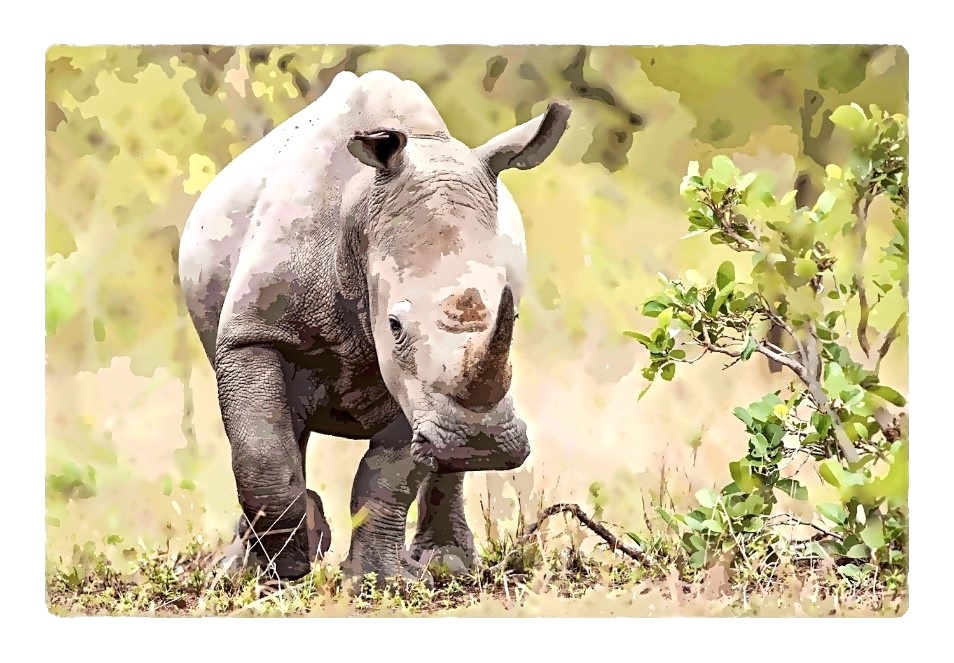
My Naam is Ceratotherium simum – Wie is Ek?
 
This image is Copyrighted © Berndt Weissenbacher/BeKaHaWe. If you like it, you may share this image as presented here under a Creative Commons Attribution-NonCommercial-NoDerivs 3.0 License (CC BY-NC-ND 3.0). NO OTHER USE OF THIS IMAGE is permitted without the express consent of the photographer.   This image is Copyrighted © Berndt Weissenbacher/BeKaHaWe. NO USE OF THIS IMAGE is permitted without express consent of the photographer.

Op my gesig dra ek twee enkel ‘horings’ wat van gekompakteerde hare gemaak is. Hulle is eintlik nes jou vingernaels en nie rêrig horings nie. My ‘horinkies’ is nog kort maar my ma s’n is baie groot. By haar is die voorste een langer en effens meer na bo gebuig; die een daaragter is korter en meer driehoekig van vorm. Ons gebruik ons horings meestal om onsself teen vyande te beskerm; dan baklei ons soos musketiers van oud met hulle swaarde.
 
 
My Naam is Terpsiphone viridis – Wie is Ek?
 
This image is Copyrighted © Berndt Weissenbacher/BeKaHaWe. If you like it, you may share this image as presented here under a Creative Commons Attribution-NonCommercial-NoDerivs 3.0 License (CC BY-NC-ND 3.0). NO OTHER USE OF THIS IMAGE is permitted without the express consent of the photographer.   This image is Copyrighted © Berndt Weissenbacher/BeKaHaWe. NO USE OF THIS IMAGE is permitted without express consent of the photographer.

My pa het die langste oranje stertvere gehad wat ek nog gesien het. Hulle was meer as twee keer langer as sy hele lyf. As hy deur die lug gesweef het, het hierdie pragtige vere agter hom gewapper soos baie lang vaandels wat in 'n sterk wind flapper. Ek is nog 'n bietjie jonk – my stertvere is nog nie heeltemal so lank soos my pa s’n was nie.
 
 
My Naam is Aepyceros melampus – Wie is Ek?
 
This image is Copyrighted © Berndt Weissenbacher/BeKaHaWe. If you like it, you may share this image as presented here under a Creative Commons Attribution-NonCommercial-NoDerivs 3.0 License (CC BY-NC-ND 3.0). NO OTHER USE OF THIS IMAGE is permitted without the express consent of the photographer.   This image is Copyrighted © Berndt Weissenbacher/BeKaHaWe. NO USE OF THIS IMAGE is permitted without express consent of the photographer.

Die speletjie waarvan ek die meeste hou het nie 'n naam nie, maar jy kan hom seker ‘gedêng-gedêng’ noem. Ons staan rustig saam met ons maats in 'n groot groep sodat ons ma’s dink ons is soet. Skielik hardloop ons almal in wye kringe deur die bos; ons volg mekaar en probeer die eerste wees deurdat ons kortpaaie tussen bossies vat of met lang spronge dit oor 'n hindernis waag. As ons ma’s kwaai raak, staan ons weer stil ... tot die volgende keer.
 
 
Ons is die Vierpotige Diere Met 'n Skubbige Vel wat Water-lewende Jagters is – Wie is Ons?
 
This image is Copyrighted © Berndt Weissenbacher/BeKaHaWe. If you like it, you may share this image as presented here under a Creative Commons Attribution-NonCommercial-NoDerivs 3.0 License (CC BY-NC-ND 3.0). NO OTHER USE OF THIS IMAGE is permitted without the express consent of the photographer.   This image is Copyrighted © Berndt Weissenbacher/BeKaHaWe. NO USE OF THIS IMAGE is permitted without express consent of the photographer.

Ons is nader familie van voëls as wat ons familie van die ‘reptiele’ is. Ons behoort aan 'n baie ou geslag van diersoorte wat die voëltjies insluit. Ons is dus glad nie ‘reptiele’ nie, soos julle mense voortgaan om ons te noem.
 
Daar is baie min soorte van ons wat jy in Afrika sal kan teëkom. Ons almal leef en maak jag op ons prooi in water. Voordat mense op ons jag gemaak het vir ons velle was ons meer volop. Die grootste van ons soort kom nog redelik wydverspreid in Afrika voor. Jy sal ons tog nog maklik in die groter riviere, moerasse, mere en damme, en selfs in strandmere en riviermondings, van suider en oostelike Afrika kan vind. Ons leef net nie in die hoë gebergtes en die woestynareas nie. Nog 'n reuse soort sal jy net in die Nyl van Noord-Afrika kan teëkom. Daar is ook twee baie kleiner soorte wat in die riviere in die oerwoude van noordwestelike Afrika leef.
 
 
My Naam is Sagittarius serpentarius – Wie is Ek?
 
This image is Copyrighted © Berndt Weissenbacher/BeKaHaWe. If you like it, you may share this image as presented here under a Creative Commons Attribution-NonCommercial-NoDerivs 3.0 License (CC BY-NC-ND 3.0). NO OTHER USE OF THIS IMAGE is permitted without the express consent of the photographer.   This image is Copyrighted © Berndt Weissenbacher/BeKaHaWe. NO USE OF THIS IMAGE is permitted without express consent of the photographer.

Ek het my gewone naam óf van die Franse óf van die Arabiere gekry. Jy sal aan die einde van hierdie kort raaisel weet hoekom dit só is. Jy sal ook weet hoekom ek een van die keuses bo die ander een verkies. Jy sal ook uitvind dat die wetenskaplikes van ouds 'n groot fout gemaak het toe hulle op my wetenskaplike naam besluit het.
 
 
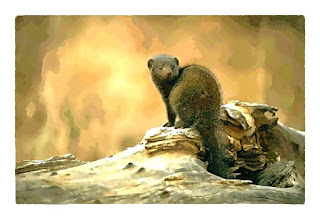
My Naam is Helogale parvula – Wie is Ek?
 
This image is Copyrighted © Berndt Weissenbacher/BeKaHaWe. If you like it, you may share this image as presented here under a Creative Commons Attribution-NonCommercial-NoDerivs 3.0 License (CC BY-NC-ND 3.0). NO OTHER USE OF THIS IMAGE is permitted without the express consent of the photographer.   This image is Copyrighted © Berndt Weissenbacher/BeKaHaWe. NO USE OF THIS IMAGE is permitted without express consent of the photographer.

Ek eet meestal klein insekte soos kewers. Ek eet ook erdwurms as ek hulle met my skerp naeltjies aan my pote uit die los grond kan uitgrawe. Ek hou ook daarvan om skerpioene te eet wat ek onder boomtakke of klippe in die veld vind. Soms kry ek dit ook reg om 'n akkedissie te vang. Ek hou glad nie van miere nie omdat hulle baie suur proe. Ek is seker dat jy ook voorkeurkos het wat jy eerder as enige ander kossoort sal eet.
 
Weet jy wie ek is? Jy is reg, ek is 'n dwergmuishondjie. Die slim wetenskaplikes het vir my die naam Helogale parvula gegee.
 
 
My Naam is Ploceus velatus – Wie is Ek?
 
This image is Copyrighted © Berndt Weissenbacher/BeKaHaWe. If you like it, you may share this image as presented here under a Creative Commons Attribution-NonCommercial-NoDerivs 3.0 License (CC BY-NC-ND 3.0). NO OTHER USE OF THIS IMAGE is permitted without the express consent of the photographer.   This image is Copyrighted © Berndt Weissenbacher/BeKaHaWe. NO USE OF THIS IMAGE is permitted without express consent of the photographer.

Ek moet nog baie leer. Watter blare is goed om mee te vleg? Watter soort knoop moet ek waar insit dat die nes wat ek bou sterk word? Ek besef ook dat ek 'n hele aantal neste sal moet bou en herbou voordat ek 'n pragtige vroutjie of twee sal kan tevrede stel.
 
As ek eers 'n nes gebou het, sal ek hom moet adverteer. Ek sal op 'n takkie naby my voltooide nes moet sit en luidkeels sing terwyl ek my vlerke fladder. Ek sal ook onder aan die nes moet hang terwyl ek sing en vlerke swaai. Dan is daar ook die gevaar dat 'n indringer my van my eie nes sal kan wegjaag. Omdat ons meestal in 'n groot bondel saam nes maak is daar altyd die gevaar dat 'n ander mannetjie jou nes en een van jou vroutjies sal steel. Dit sal baie van my vat om my eerste familie te kan groot maak.
 
 
Ons is die Tweevlerkige Insekte van die Orde Diptera – Wie is Ons?
 
This image is Copyrighted © Berndt Weissenbacher/BeKaHaWe. If you like it, you may share this image as presented here under a Creative Commons Attribution-NonCommercial-NoDerivs 3.0 License (CC BY-NC-ND 3.0). NO OTHER USE OF THIS IMAGE is permitted without the express consent of the photographer.   This image is Copyrighted © Berndt Weissenbacher/BeKaHaWe. NO USE OF THIS IMAGE is permitted without express consent of the photographer.

Wat is die belangrikste leidraad oor wié ons is? Ons het net een paar vlerke! As jy ooit nie seker is watter inseksoort jy besig is om te aanskou nie, tel net die vlerke. Ons vlerke is membraanagtig en vir vlieg aangepas. Hulle is redelik groot en het meestal 'n ovaal vorm. Omdat hierdie vlerke deurskynend is, breek hulle sonlig in sy verskillende kleure op. Jy kan dus al die kleure van 'n reënboog op ons vlerke sien dans. In sommige soorte word hierdie kleurvolle skouspel as seine gebruik om 'n maat mee aan te lok.
 
 
My Naam is Syncerus caffer – Wie is Ek?
 
This image is Copyrighted © Berndt Weissenbacher/BeKaHaWe. If you like it, you may share this image as presented here under a Creative Commons Attribution-NonCommercial-NoDerivs 3.0 License (CC BY-NC-ND 3.0). NO OTHER USE OF THIS IMAGE is permitted without the express consent of the photographer.   This image is Copyrighted © Berndt Weissenbacher/BeKaHaWe. NO USE OF THIS IMAGE is permitted without express consent of the photographer.

Ons leef in groot troppe saam om ons teen ons grootste vyande, die leeus, te beskerm. As hulle probeer om ons te jag hardloop ons in 'n bondel weg. As hulle egter een van ons bedreig, draai ons om – dan is die lawwe leeus sommer in die moeilikheid want ons kan hulle baie seermaak deur hulle met ons horings te gaffel.
 
Mense sê dat ons nors is. Ek dink dit is 'n fout – ons is vriendelik solank jy ons nie kwaad wil aandoen nie. As jy moeilikheid by ons soek sal jy dit kry net omdat ons mekaar sal verdedig. Ek dink jou familie tree ook só op as daar gevaar dreig.
 
 
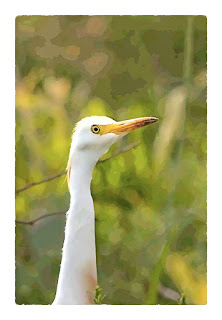
My Naam is Bubulcus ibis – Wie is Ek?
 
This image is Copyrighted © Berndt Weissenbacher/BeKaHaWe. If you like it, you may share this image as presented here under a Creative Commons Attribution-NonCommercial-NoDerivs 3.0 License (CC BY-NC-ND 3.0). NO OTHER USE OF THIS IMAGE is permitted without the express consent of the photographer.   This image is Copyrighted © Berndt Weissenbacher/BeKaHaWe. NO USE OF THIS IMAGE is permitted without express consent of the photographer.

Ek het 'n korterige, reguit nek wat nooit 'n kink in het nie, anders as die meeste voëlsoorte wat na aan my verwant is. My kop is rond maar ek het 'n sterk, reguit, swart snawel wat na 'n skerp punt toe loop – dit laat my kop 'n bietjie driehoekig lyk. Met my snawel kan ek maklik my prooi tussen grasse of blare oppik en vas hou. Al is my geel oë klein, is hulle baie skerp en ek sal die kleinste beweging raaksien.
 
 
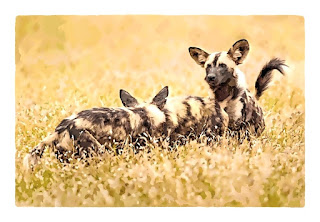
My Naam is Lycaon pictus – Wie is Ek?
 
This image is Copyrighted © Berndt Weissenbacher/BeKaHaWe. If you like it, you may share this image as presented here under a Creative Commons Attribution-NonCommercial-NoDerivs 3.0 License (CC BY-NC-ND 3.0). NO OTHER USE OF THIS IMAGE is permitted without the express consent of the photographer.   This image is Copyrighted © Berndt Weissenbacher/BeKaHaWe. NO USE OF THIS IMAGE is permitted without express consent of the photographer.

My pels is van digte, sagte lang hare gemaak. My hele lyf is versier met blertse en blokkies van wit, goudgeel, rooi-bruin en swart patrone. Almal van ons het 'n unieke skakering – jy sal nooit twee van ons vind wat eenders lyk nie, al soek jy vir jare aaneen. Ek kan dus almal in my groot familie uitmekaar ken; soms is dit natuurlik nie 'n goeie ding nie – as ek stouterig is weet almal onmiddellik dat ek die skuldige is.

EXCERPTS FROM: “Who am I?” “Who are We?” – Short Riddles Posed by African Animals – Series 2


Each series contains fourteen short riddles. These are posed to the young reader by six species of mammals, five bird species, two orders of insects and one group of ‘reptiles’. Each riddle is illustrated with superb images. Learn more about each species’ or group’s distinctive personality, characteristics and quirks by attempting to answer the questions “Who am I?” and “Who are We?”.

To find these books at your favourite eBook seller, follow the link

https://books2read.com/ap/8NkvaJ/Tnreb-Rekabnessiev


My Name is Xerus inauris – Who am I?

This image is Copyrighted © Berndt Weissenbacher/BeKaHaWe. If you like it, you may share this image as presented here under a Creative Commons Attribution-NonCommercial-NoDerivs 3.0 License (CC BY-NC-ND 3.0). NO OTHER USE OF THIS IMAGE is permitted without the express consent of the photographer.   This image is Copyrighted © Berndt Weissenbacher/BeKaHaWe. NO USE OF THIS IMAGE is permitted without express consent of the photographer.

I am a rodent; this means that my front teeth, my incisors, are much longer than are your front teeth. Mine are also razor-sharp. They work like chisels when I need to chew through a hard seedpod or the shell of a nut. I like seeds, seedpods, tubers and some kinds of juicy leaves. Sometimes I eat flowers and fruits, if I can find them. My paws end in short, sharp claws – with these I can hold onto seedpods or fruit whilst I am busy gnawing them.
 
 
My Name is Bucorvus leadbeateri – Who am I?
 
This image is Copyrighted © Berndt Weissenbacher/BeKaHaWe. If you like it, you may share this image as presented here under a Creative Commons Attribution-NonCommercial-NoDerivs 3.0 License (CC BY-NC-ND 3.0). NO OTHER USE OF THIS IMAGE is permitted without the express consent of the photographer.   This image is Copyrighted © Berndt Weissenbacher/BeKaHaWe. NO USE OF THIS IMAGE is permitted without express consent of the photographer.

Because I do not have hands, I throw my food into the air with a tug of my beak – then I catch it in my mouth so that I can swallow my food in one piece. Unlike you, I never chew my food. You will laugh at me if I confess that I sometimes have to try a few times to be able to swallow a wriggling locust or small frog.
 
Because of my very large bill and because I find food only on the ground, I was given the name ground hornbill. I know that you worked it out as such. However, did you also know that my scientific name is Bucorvus leadbeateri?
 
 
We are the Bustling Membrane-winged Insects of the Order Hymenoptera – Who are We?
 
This image is Copyrighted © Berndt Weissenbacher/BeKaHaWe. If you like it, you may share this image as presented here under a Creative Commons Attribution-NonCommercial-NoDerivs 3.0 License (CC BY-NC-ND 3.0). NO OTHER USE OF THIS IMAGE is permitted without the express consent of the photographer.   This image is Copyrighted © Berndt Weissenbacher/BeKaHaWe. NO USE OF THIS IMAGE is permitted without express consent of the photographer.

One of the interesting facts about us that maybe you know about already, is that we are all little females who live together in a nest. More than that, we are also all sisters who stay together with our mummy, the queen. Our mummy lays all the little eggs from which our new little sisters will hatch. Sometimes our mummy also lays little eggs from which our little brothers will hatch, but our little brothers are not allowed to live with us for a long time. Once they are big enough and they are ready, we throw them out of the nest. They must then fly far away to find a shelter and food for themselves, and of course also a little princess that will then start her own new nest and family all on her own.
 
 
My Name is Ceratotherium simum – Who am I?
 
This image is Copyrighted © Berndt Weissenbacher/BeKaHaWe. If you like it, you may share this image as presented here under a Creative Commons Attribution-NonCommercial-NoDerivs 3.0 License (CC BY-NC-ND 3.0). NO OTHER USE OF THIS IMAGE is permitted without the express consent of the photographer.   This image is Copyrighted © Berndt Weissenbacher/BeKaHaWe. NO USE OF THIS IMAGE is permitted without express consent of the photographer.

On my face, I carry two single ‘horns’ made of hair that is packed together very tightly. They are actually just like your fingernails and not really horns at all. My little ‘horns’ are still short, but my mummy’s are very large. With her, the one in front is longer and slightly more curved upwards; the one behind is shorter and more like a triangle in shape. We use our horns mostly to protect ourselves against enemies; then we fight like the musketeers of old did with their swords.
 
 
My Name is Terpsiphone viridis – Who am I?
 
This image is Copyrighted © Berndt Weissenbacher/BeKaHaWe. If you like it, you may share this image as presented here under a Creative Commons Attribution-NonCommercial-NoDerivs 3.0 License (CC BY-NC-ND 3.0). NO OTHER USE OF THIS IMAGE is permitted without the express consent of the photographer.   This image is Copyrighted © Berndt Weissenbacher/BeKaHaWe. NO USE OF THIS IMAGE is permitted without express consent of the photographer.

My dad had the longest orange tail feathers that I have ever seen. They were more than twice as long as his whole body. When he glided through the air, the beautiful feathers fluttered behind him like very long banners that are flapping in a strong wind. I am still a little bit young – my tail feathers are still not quite as long as my dad's were.
 
 
My Name is Aepyceros melampus – Who am I?
 
This image is Copyrighted © Berndt Weissenbacher/BeKaHaWe. If you like it, you may share this image as presented here under a Creative Commons Attribution-NonCommercial-NoDerivs 3.0 License (CC BY-NC-ND 3.0). NO OTHER USE OF THIS IMAGE is permitted without the express consent of the photographer.   This image is Copyrighted © Berndt Weissenbacher/BeKaHaWe. NO USE OF THIS IMAGE is permitted without express consent of the photographer.

The game that I like the most does not have a name, but you can certainly call it ‘gedang-gedang’. We stand together calmly in a large group of pals so that our mummies think that we are being good. Suddenly, we all run in wide circles through the bush; we follow each other and try to be the first by taking shortcuts between shrubs or by daring to use long jumps to get over an obstacle. When our mummies become angry, we again stand calmly... until the next time.
 
 
We are the Four-legged Animals with a Scaly Skin that are Water-living Hunters – Who are We?
 
This image is Copyrighted © Berndt Weissenbacher/BeKaHaWe. If you like it, you may share this image as presented here under a Creative Commons Attribution-NonCommercial-NoDerivs 3.0 License (CC BY-NC-ND 3.0). NO OTHER USE OF THIS IMAGE is permitted without the express consent of the photographer.   This image is Copyrighted © Berndt Weissenbacher/BeKaHaWe. NO USE OF THIS IMAGE is permitted without express consent of the photographer.

We are more closely related to the birds than we are related to the ‘reptiles’. We belong to a very old line of animal species that includes the birds. So we are not ‘reptiles’ at all as you people continue to call us.

There are but very few species of us that you will be able to encounter in Africa. We all live and hunt for our prey in water. Before people started hunting us for our skins, we were more plentiful. The largest of our kind still occurs fairly widely spread across Africa. You can still find us easily in the larger rivers, swamps, lakes and dams, and even in lagoons and estuaries, of southern and eastern Africa. We only never live in the high mountains and the desert areas. Another huge species you will be able to encounter only in the Nile of North Africa. There are also two very much smaller species that live in the rivers in the rainforests of northwestern Africa.
 
 
My Name is Sagittarius serpentarius – Who am I?
 
This image is Copyrighted © Berndt Weissenbacher/BeKaHaWe. If you like it, you may share this image as presented here under a Creative Commons Attribution-NonCommercial-NoDerivs 3.0 License (CC BY-NC-ND 3.0). NO OTHER USE OF THIS IMAGE is permitted without the express consent of the photographer.   This image is Copyrighted © Berndt Weissenbacher/BeKaHaWe. NO USE OF THIS IMAGE is permitted without express consent of the photographer.

I got my common name either from the French or from the Arabs. At the end of this short riddle, you will know why this is so. You will know as well why I prefer one of the choices above the other. You will also find out that the scientists of old had made a big mistake when they decided on my scientific name a long time ago.
 
 
My Name is Helogale parvula – Who am I?
 
This image is Copyrighted © Berndt Weissenbacher/BeKaHaWe. If you like it, you may share this image as presented here under a Creative Commons Attribution-NonCommercial-NoDerivs 3.0 License (CC BY-NC-ND 3.0). NO OTHER USE OF THIS IMAGE is permitted without the express consent of the photographer.   This image is Copyrighted © Berndt Weissenbacher/BeKaHaWe. NO USE OF THIS IMAGE is permitted without express consent of the photographer.

Mostly, I eat small insects such as beetles. I also eat earthworms if I can dig them out of the loose soil using the sharp claws on my feet. I also like to eat scorpions that I find in the veld under logs or stones. Occasionally I get it right to catch a small lizard as well. I do not like eating ants at all because they are so sour. I am certain that you too have your favourite food that you enjoy eating more than any other kind of food.
 
Do you know who I am? You are right; I am a dwarf mongoose. The clever scientists have given me the name Helogale parvula.
 
 
My Name is Ploceus velatus – Who am I?
 
This image is Copyrighted © Berndt Weissenbacher/BeKaHaWe. If you like it, you may share this image as presented here under a Creative Commons Attribution-NonCommercial-NoDerivs 3.0 License (CC BY-NC-ND 3.0). NO OTHER USE OF THIS IMAGE is permitted without the express consent of the photographer.   This image is Copyrighted © Berndt Weissenbacher/BeKaHaWe. NO USE OF THIS IMAGE is permitted without express consent of the photographer.

I still have a lot to learn. Which leaves are good for weaving? What kind of knot should I place where so that the nest I am building will become strong? I also realise that I will have to build and rebuild a whole lot of nests before I will be able to satisfy a beautiful little lady or two.
 
Once I have built a nest, I will have to advertise it. I will have to perch on a small branch near my finished nest and sing loudly while I flutter my wings. I will also have to hang from the underside of the nest as I sing and flap my wings. Then there is also the danger that an intruder will be able to chase me from my own nest. Because we usually nest together in a large bundle, there is always the danger that another male will steal one of your nests and one of your little ladies. It will take a lot for me to bring up my first family.
 
 
We are the Two-winged Insects of the Order Diptera – Who are We?
 
This image is Copyrighted © Berndt Weissenbacher/BeKaHaWe. If you like it, you may share this image as presented here under a Creative Commons Attribution-NonCommercial-NoDerivs 3.0 License (CC BY-NC-ND 3.0). NO OTHER USE OF THIS IMAGE is permitted without the express consent of the photographer.   This image is Copyrighted © Berndt Weissenbacher/BeKaHaWe. NO USE OF THIS IMAGE is permitted without express consent of the photographer.

What is the most important clue about who we are? We have only one pair of wings! If ever you are not sure what type of insect you are looking at, just count the wings. Our wings are membrane-like and adapted for flying. They are quite large and usually have an oval shape. Because these wings are see-through, they break up sunlight into its different colours. Therefore, you can see all the colours of a rainbow dancing on our wings. In some species, this colourful spectacle is used as signals with which to attract a mate.
 
 
My Name is Syncerus caffer – Who am I?
 
This image is Copyrighted © Berndt Weissenbacher/BeKaHaWe. If you like it, you may share this image as presented here under a Creative Commons Attribution-NonCommercial-NoDerivs 3.0 License (CC BY-NC-ND 3.0). NO OTHER USE OF THIS IMAGE is permitted without the express consent of the photographer.   This image is Copyrighted © Berndt Weissenbacher/BeKaHaWe. NO USE OF THIS IMAGE is permitted without express consent of the photographer.

We live together in great herds to protect ourselves from our greatest enemies, the lions. If they try to hunt us, we run away in a big bundle. Yet, if they threaten one of us, we turn around – then the silly lions are really in trouble because we can hurt them badly by gashing them with our horns.
 
People say that we are bad-tempered. I think that this is a mistake – we are friendly as long as you do not want to do us any harm. If you are looking for trouble with us, you will get it just because we will defend one another. I think your family also acts like this if there is danger threatening.
 
 
My Name is Bubulcus ibis – Who am I?
 
This image is Copyrighted © Berndt Weissenbacher/BeKaHaWe. If you like it, you may share this image as presented here under a Creative Commons Attribution-NonCommercial-NoDerivs 3.0 License (CC BY-NC-ND 3.0). NO OTHER USE OF THIS IMAGE is permitted without the express consent of the photographer.   This image is Copyrighted © Berndt Weissenbacher/BeKaHaWe. NO USE OF THIS IMAGE is permitted without express consent of the photographer.

I have quite a short, straight neck that never has a kink in it unlike most bird species that are closely related to me. My head is round but I have a strong, straight, black bill that stretches to a sharp point – this makes my head look a little bit triangular. With my bill, I can easily snatch up and hold onto my prey between grasses or leaves. Even though my yellow eyes are small, they are very keen and I will spot the smallest of movements.
 
 
My Name is Lycaon pictus – Who am I?
 
This image is Copyrighted © Berndt Weissenbacher/BeKaHaWe. If you like it, you may share this image as presented here under a Creative Commons Attribution-NonCommercial-NoDerivs 3.0 License (CC BY-NC-ND 3.0). NO OTHER USE OF THIS IMAGE is permitted without the express consent of the photographer.   This image is Copyrighted © Berndt Weissenbacher/BeKaHaWe. NO USE OF THIS IMAGE is permitted without express consent of the photographer.

My fur is made of dense, soft, long hairs. My entire body is decorated with blobs and blocks of white, golden yellow, red-brown and black patterns. Each one of us has a unique colouration – you will never find two of us that look alike, even if you were to search for years on end. Therefore, I can tell everyone in my big family apart; sometimes this is obviously not a good thing – if I am being naughty, everyone knows immediately that I am the culprit.

Friday, 4 December 2020

ON PHOTOGRAPHY: Maximising the Odds of Photographic Expression – 1. Being a Black-backed Jackal


At the end of this year (2020), I will have pursued my singular passion for photography for a full five decades. Although my focus as an exclusively environmental photographer (as I call it) is very narrow, I would like to regard myself as a serious photographer first, and then as a crafter of images of the environment, its flora and its fauna.


This image is Copyrighted © Berndt Weissenbacher/BeKaHaWe. If you like it, you may share this image as presented here under a Creative Commons Attribution-NonCommercial-NoDerivs 3.0 License (CC BY-NC-ND 3.0). NO OTHER USE OF THIS IMAGE is permitted without the express consent of the photographer.


My second great passion, which has compelled me for almost as long as photography has, is the experience, exploration and research of the interplay between organisms (especially animals) and their environment. In my view of the natural world, individual beings fit into their species-specific habitat much as a hand occupies a glove – except that in this instance the ‘glove’, the environment, is immeasurably larger than the organism itself is. There is also interaction and exchange of vital information and substances between the organism and its environment. It is this sense of the embeddedness of individuals within their habitat that I wish to explore and capture in images.


This image is Copyrighted © Berndt Weissenbacher/BeKaHaWe. If you like it, you may share this image as presented here under a Creative Commons Attribution-NonCommercial-NoDerivs 3.0 License (CC BY-NC-ND 3.0). NO OTHER USE OF THIS IMAGE is permitted without the express consent of the photographer.


As a photographer, I consider myself as an explorer, not of reality, but of light and shadow, line, shape and form, texture and tone, pattern and rhythm, and of how these visual elements will contribute to the expression of my intention in the final photograph. Most importantly, as a photographer I am a surveyor of the Self, an explorer of my own, unique internal world of the imagination.


This image is Copyrighted © Berndt Weissenbacher/BeKaHaWe. If you like it, you may share this image as presented here under a Creative Commons Attribution-NonCommercial-NoDerivs 3.0 License (CC BY-NC-ND 3.0). NO OTHER USE OF THIS IMAGE is permitted without the express consent of the photographer.


Photography is a most demanding craft to master. To capture the compositions and the quality of light in images that will complement your projected visual communication always requires forethought, skill and hard work; your success also depends greatly on chance if you work outdoors. Photography becomes even more serendipitous when the subject is an organism (or many) that can not be controlled. All photographers appreciate a second bite at the cherry (as they say), or, at least, they would hope for an extended episode during which they can explore several different compositions of the same setting, the identical subject, to maximise the chances of capturing at least one exceptional image. Such repetition of opportunity is especially rare when photographing fauna, flora and the natural environment.


This image is Copyrighted © Berndt Weissenbacher/BeKaHaWe. If you like it, you may share this image as presented here under a Creative Commons Attribution-NonCommercial-NoDerivs 3.0 License (CC BY-NC-ND 3.0). NO OTHER USE OF THIS IMAGE is permitted without the express consent of the photographer.


I search actively for images. I am not inclined to sit in a hide for hours, waiting and hoping for the arrival of an organism in a scene that I can not change. On foot or from a vehicle, I hunt for and pounce on special light or a photogenic sighting of my intended prey. However, when the prospect arises, two different, yet related circumstances afford me the greatest opportunity to delight in, observe, mull over, explore and toil at photography of the interplay between organisms and their habitat. Both situations, if available to me, provide several separate chances for capturing images of a particular subject. One approach, more difficult to seek out and to explore, involves the repeated sighting of a particular individual or a group of animals (the subjects). The alternative setting (which I will discuss in a follow-on blog) involves travelling to and spending time repeatedly in the same small locality (the place).


This image is Copyrighted © Berndt Weissenbacher/BeKaHaWe. If you like it, you may share this image as presented here under a Creative Commons Attribution-NonCommercial-NoDerivs 3.0 License (CC BY-NC-ND 3.0). NO OTHER USE OF THIS IMAGE is permitted without the express consent of the photographer.


The intentions of animals are unknowable by definition. At best, we may conclude from the current behaviour we witness what action is likely (usually hopefully) to follow; at worst, the behaviour of individuals or groups of animals is unpredictable. By spending some time in their presence, on several separate occasions, I can at least observe a number of episodes of behaviour. While not necessarily the same actions are ever repeated, at least different encounters allow me to observe the animal or group more attentively and to identify any patterns in the coming-and-going and their manners. Thus I can familiarise myself slightly with the animals’ environmental setting and their response to it. Their behaviour may remain unpredictable; at least the likelihood of me bagging a splendid photograph becomes marginally more probable. 


This image is Copyrighted © Berndt Weissenbacher/BeKaHaWe. If you like it, you may share this image as presented here under a Creative Commons Attribution-NonCommercial-NoDerivs 3.0 License (CC BY-NC-ND 3.0). NO OTHER USE OF THIS IMAGE is permitted without the express consent of the photographer.


Constantly I am on the lookout for burrows and nests to which animals will return regularly. I may not intend to photograph aspects of their reproductive behaviour, but I am a tad more confident that I will be able to spy (not necessarily photograph) my intended prey. During the heat of late mornings and early afternoons, waterholes or riverbanks will also attract animals – not necessarily the same individuals, however. In addition, speaking regularly to rangers or even tourists who have remained in an area for quite a while is useful. Most often, such people possess a wealth of knowledge of the area and its game, or, at least, they are wildlife enthusiasts and will share willingly any information they have about the localities that will proffer my best prospects of encountering certain species of animals. Even in the absence of burrows, nests, waterholes and informants, I have had many opportunities of spending some time in the company of particular individuals, getting several bites at digital photography. (Hehe… I apologise!)


This image is Copyrighted © Berndt Weissenbacher/BeKaHaWe. If you like it, you may share this image as presented here under a Creative Commons Attribution-NonCommercial-NoDerivs 3.0 License (CC BY-NC-ND 3.0). NO OTHER USE OF THIS IMAGE is permitted without the express consent of the photographer.


By now it is public knowledge that rain follows me wherever I happen to go on photographic trips. One April several years ago, Jacqui and I had splurged out to visit Tamboti Camp in the central region of the Kruger National Park, South Africa. Predictably, the rain pelted or drizzled down for more than a week – the light was less than ideal and sightings that could be worked and photographed were rare.


This image is Copyrighted © Berndt Weissenbacher/BeKaHaWe. If you like it, you may share this image as presented here under a Creative Commons Attribution-NonCommercial-NoDerivs 3.0 License (CC BY-NC-ND 3.0). NO OTHER USE OF THIS IMAGE is permitted without the express consent of the photographer.


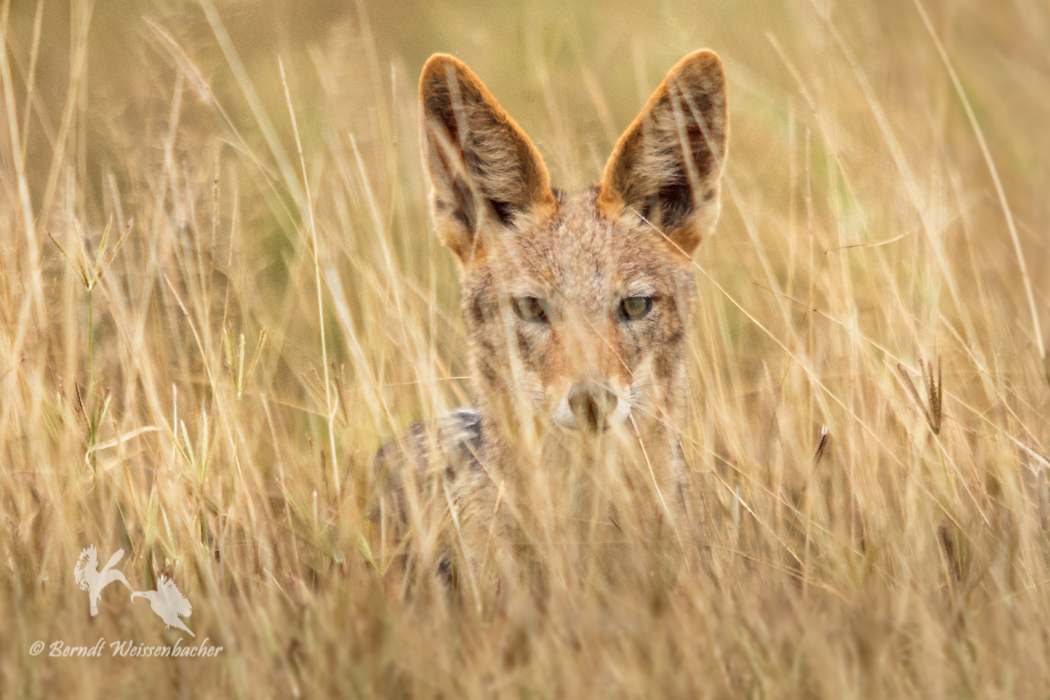
Nevertheless, on our first morning drive, we spotted a single Black-backed Jackal male running through a sizeable open area. Upon our return from our first drive, a beautiful young female jackal had joined the male. This pair entertained us with their antics most mornings and most evenings, performed as a duo or singly. Knowing of their presence reduced the need to pursue sightings and capture images of wildlife in the gloomy and wet conditions. When the jackals decided to show themselves, we simply spent the morning or evening in their presence; when the pair had gone into hiding or were traipsing around further afield, Jacqui and I continued with an extended drive.


This image is Copyrighted © Berndt Weissenbacher/BeKaHaWe. If you like it, you may share this image as presented here under a Creative Commons Attribution-NonCommercial-NoDerivs 3.0 License (CC BY-NC-ND 3.0). NO OTHER USE OF THIS IMAGE is permitted without the express consent of the photographer.


Not much happened; we did not get to see unique or impressive jackal behaviour that week. Yet, being afforded the opportunity to concentrate on capturing this pair of jackals, I managed to collect several images – together they do reveal, at least, an inkling of what it takes to be a Black-backed Jackal.

Saturday, 28 November 2020

ABOUT THIS IMAGE… ‘ ‘Predator’ on Predator’ and ‘Wild Eye’


Since the vagaries of the market place ensure that a few select individuals are rewarded for their work much more handsomely than the majority are, I have been able to afford only very few longer photographic trips. On only three occasions, I have managed to spend a significant time in the Kruger National Park, attempting to capture and express the passion that I feel for this awesome reserve. All three opportunities were washed out completely – rain or drizzle rinsed the Lowveld clean, every day, morning and evening, leaving only the midday hours on a few days with harsh, uninspiring sunlight.


This image is Copyrighted © Berndt Weissenbacher/BeKaHaWe. If you like it, you may share this image as presented here under a Creative Commons Attribution-NonCommercial-NoDerivs 3.0 License (CC BY-NC-ND 3.0). NO OTHER USE OF THIS IMAGE is permitted without the express consent of the photographer.


My last wet and grey sojourn to Kruger took place in February 2017. (This was the last time a long Kruger trip was hampered by continuous rain, not the last occasion during which the rain-gods blessed me with an unwelcome present. That happened in March of this year, on my last pre-lockdown photographic trip.) In 2017, I had planned to spend sixteen nights in Kruger, for once swapping my favoured northern regions for an exploration of the central and southern sections of the park.


This image is Copyrighted © Berndt Weissenbacher/BeKaHaWe. If you like it, you may share this image as presented here under a Creative Commons Attribution-NonCommercial-NoDerivs 3.0 License (CC BY-NC-ND 3.0). NO OTHER USE OF THIS IMAGE is permitted without the express consent of the photographer.


I was nearing the end of this marvellous trip, despite the constant heavy rain. I had booked the last three nights at Pretoriuskop, a camp in the southwestern sector of Kruger, and one that I had last visited as a very young child. In general, I avoid the southern regions of Kruger – they are too crowded for my liking. I loathe even more having to travel long distances between camps, so I was not looking forward with any glee to the 140 kilometres or so from Satara to Pretoriuskop. Using the morning hours to travel slowly, to spot, to investigate and to work any potential sightings photographically, this trip would take a minimum of eight hours to complete.


This image is Copyrighted © Berndt Weissenbacher/BeKaHaWe. If you like it, you may share this image as presented here under a Creative Commons Attribution-NonCommercial-NoDerivs 3.0 License (CC BY-NC-ND 3.0). NO OTHER USE OF THIS IMAGE is permitted without the express consent of the photographer.


So far, the trip had been a mixed bag of bad lighting, meagre photogenic sightings and, by now, a small, wet and somewhat musty tent. Worse still, I was heading into an area of the park that I could remember only vaguely. I would be working for two days in an environment that I was struggling to previsualise. Nevertheless, I trundled off down the main tar road towards my next accommodation.


This image is Copyrighted © Berndt Weissenbacher/BeKaHaWe. If you like it, you may share this image as presented here under a Creative Commons Attribution-NonCommercial-NoDerivs 3.0 License (CC BY-NC-ND 3.0). NO OTHER USE OF THIS IMAGE is permitted without the express consent of the photographer.


Along the way, I stopped at the ‘city’ of Tshokwane. Gone was the intimate picnic spot in the bush that I remember from childhood. Now, several restaurants were vying for the attention and the tourist dollars/pounds/euros. I fled as quickly as I could squeeze out a long-overdue personal pit-stop.

I confess that my mood at this point was sombre to say the least. The crowds, the traffic in southern Kruger do not agree with this old codger. I rattled on down the tar road. At midday, as I rolled over a blind rise, I spotted a massive male leopard ambling along the tar road, also heading south, some 200 metres in front of me. I slowed down immediately to follow this magnificent beast. I was hoping that he would soon leave the road so that I could get closer without spooking him. As I snapped off a record shot through the rain-spattered windshield to show the folks back home that I indeed had seen a leopard on this trip, I caught a glimpse in the rear-view mirror of a jeep-jock safari-vehicle motoring over the rise behind me.


This image is Copyrighted © Berndt Weissenbacher/BeKaHaWe. If you like it, you may share this image as presented here under a Creative Commons Attribution-NonCommercial-NoDerivs 3.0 License (CC BY-NC-ND 3.0). NO OTHER USE OF THIS IMAGE is permitted without the express consent of the photographer.


For me personally, these are the worst moments in any game park. I will always share sightings – after all, all visitors spend time in Kruger or another game reserve precisely for the unexpected encounters with game. Yet, a sighting of game ambling along the road inevitably draws a mini-traffic-jam, a circumstance that I will avoid at all cost.

I could not change lenses and I was trapped with long focal-length lenses on all cameras. Moreover, game on a road is not my game as a photographer. Perhaps I could overtake the leopard slowly and very carefully; then, as he ambled past my window, I could possibly snap a portrait of this walking cat. Everything worked out according to plan: I passed the leopard, pulled over to a stop on the opposite side of the road, switched off the engine and the leopard kept on walking towards me. As I peered through the viewfinder, I realised I could not get a shot of the head of the leopard without the road being included in the frame. As he got closer, I spotted an engorged tick on his lower lip – this was it, this could become the focus of a very different portrait, not of a leopard, but of a parasite on a leopard: ‘‘Predator’ on Predator’.


This image is Copyrighted © Berndt Weissenbacher/BeKaHaWe. If you like it, you may share this image as presented here under a Creative Commons Attribution-NonCommercial-NoDerivs 3.0 License (CC BY-NC-ND 3.0). NO OTHER USE OF THIS IMAGE is permitted without the express consent of the photographer.


After a single exposure, I fired the ignition to continue following the leopard. By now, the jeep-jock behind me had almost caught up. Ahead of me, still at some distance, I saw two more jeep-jocks pelting towards the leopard from the south. I knew that the leopard would bolt, so I followed it slowly at some distance. As soon as the safari-crowd pulled alongside my vehicle and accelerated, the leopard vanished in a streak, off the high embankment and under a dense thicket of low scrub. The jeep-jock had overshot the mark in his haste to deliver a leopard to the wildly gesticulating and very noisy crowd perched atop his vehicle. I pulled onto the oncoming verge and chose a spot where I could see the entire thicket into which the leopard had vanished. I used my longest lens to scan the undergrowth for any sign of the leopard. Very occasionally, I could glimpse through the dense twigs, leaves and tall grasses, only a few long, white whiskers whenever the leopard yawned.


This image is Copyrighted © Berndt Weissenbacher/BeKaHaWe. If you like it, you may share this image as presented here under a Creative Commons Attribution-NonCommercial-NoDerivs 3.0 License (CC BY-NC-ND 3.0). NO OTHER USE OF THIS IMAGE is permitted without the express consent of the photographer.


Obviously, I was swamped by the inevitable southern Kruger traffic-jam. I could not move my vehicle at all, so I decided to wait it out as patiently as I could do. If the leopard moved out of the thicket, I might be able to snap off a shot. I picked a very small opening in the undergrowth, just in front of the hidden head of the leopard, pre-focused my lens on this tiny gap, and waited.

After 40 minutes or so of loud shouts, revving engines and even much hooting, the leopard had had enough. Suddenly he sat up inside the thicket, still concealed behind impenetrable twigs, leaves and tall grasses. He must have been a proponent of telepathy; he must have picked up my loud thoughts of ‘Only one look!’. As if he understood my mental entreaties, he leant forward and granted me just one momentary glance with one eye through the tiny aperture in the bush on which I had chosen to focus, spun around and crashed out of the back end of the thicket.

Gone. Yet he had given me a special present: a single frame, a single photograph: ‘Wild Eye’.


This image is Copyrighted © Berndt Weissenbacher/BeKaHaWe. If you like it, you may share this image as presented here under a Creative Commons Attribution-NonCommercial-NoDerivs 3.0 License (CC BY-NC-ND 3.0). NO OTHER USE OF THIS IMAGE is permitted without the express consent of the photographer.


Since that trip, I have revisited the southern sections of Kruger on several occasions. The noise, the hubbub and the traffic – particularly of the jeep-jocks and their safari-crowds from the countless ‘game lodges’ that border the south of Kruger – still let my hairs stand on end. Yet the southern part of Kruger – not visited and experienced since childhood days – has crept into and lodged itself permanently in this old heart of mine.