Showing posts with label how to?. Show all posts

Sunday, 6 December 2020

ON PHOTOGRAPHY: Maximising the Odds of Photographic Expression – 2. A Farm Called Palmietpan


In the previous blog, I discussed very briefly how spending some time in the company of the same individual or small group of animals on separate occasions has allowed me to explore their lives more intimately and meaningfully through photography. This is one strategy that I relish whenever I stumble across such an infrequent and special instance. I indicated too that spending time repeatedly in the same small locality on separate trips has allowed me to maximise the odds of capturing the sense of place much more intensely. Repeated visits have not only allowed me to broaden my understanding, appreciation and feel for a locale; recurring outings to the same area also spur me on to work harder at capturing all features of a place photographically.


This image is Copyrighted © Berndt Weissenbacher/BeKaHaWe. If you like it, you may share this image as presented here under a Creative Commons Attribution-NonCommercial-NoDerivs 3.0 License (CC BY-NC-ND 3.0). NO OTHER USE OF THIS IMAGE is permitted without the express consent of the photographer.


In a significant way, a locality brings to light its magnificence, beauty and meaning to me (as a photographer) only once I have taken several photographs during an initial visit, I have had time thereafter to reflect on these images, and then I have had an occasion to revisit the region once more. This allows me to compare my first photographic efforts to the actual place and to my experiences of it during this subsequent opportunity. Moreover, on succeeding visits, I inevitably discover new, previously unobserved features of the place, different conditions of lighting, my different moods will evoke different responses each time around, and the place itself too will have altered in many particulars. Never has a locality confronted me with congruent combinations of visual delights or photographic challenges as on any previous occasion. 


This image is Copyrighted © Berndt Weissenbacher/BeKaHaWe. If you like it, you may share this image as presented here under a Creative Commons Attribution-NonCommercial-NoDerivs 3.0 License (CC BY-NC-ND 3.0). NO OTHER USE OF THIS IMAGE is permitted without the express consent of the photographer.


Any destination, no matter how often I have visited it, will always provide unique experiences if I remain receptive to its sense of place and I am willing to pursue it. At a very young age I learnt that having encountered a particular place and photographed it, does not equate with comprehension, appreciation and complete discovery of a locale.


This image is Copyrighted © Berndt Weissenbacher/BeKaHaWe. If you like it, you may share this image as presented here under a Creative Commons Attribution-NonCommercial-NoDerivs 3.0 License (CC BY-NC-ND 3.0). NO OTHER USE OF THIS IMAGE is permitted without the express consent of the photographer.


I have written previously about Palmietpan, a small sheep and cattle farm in the south-western Free State Province of South Africa. As with all agricultural landscapes, fences, tracks and roads crisscross Palmietpan too, and the farm is peppered with cribs, windmills, kraals and outbuildings. Worse still, Palmietpan is situated on the outskirts of the town of Hertzogville/Malebogo – maize silos, electricity pylons and telephone lines dominate the skyline. The general landscape of Palmietpan is monotonous; flat grassland covers most of the farm, with an occasional clump of several Acacia thorn-tree species, Buffalo-Thorn Jujube, Karee and Wild Asparagus at watering-points. A small, shallow dam and a large pan are present as open expanses of cracked clay for most of the year – in summers with good rainfall, they do hold some shallow water. An isolated portion of the farm is covered by open bushveld, but I have had only very few opportunities to spend time there with a camera.


This image is Copyrighted © Berndt Weissenbacher/BeKaHaWe. If you like it, you may share this image as presented here under a Creative Commons Attribution-NonCommercial-NoDerivs 3.0 License (CC BY-NC-ND 3.0). NO OTHER USE OF THIS IMAGE is permitted without the express consent of the photographer.


Family commitments have always determined the times of my visits, most often during the end of summer or in the middle of winter. In addition, many visits have coincided with times of severe drought. Of all the places I visit regularly, Palmietpan has set the greatest challenge photographically. Apart from a brief stopover of a sporadic vagrant (a Kudu or a Warthog, for example), the farm is devoid of large game. For a photographer interested in the environment and its inhabitants, first impressions of Palmietpan are that this farm is unphotogenic in extremis.


This image is Copyrighted © Berndt Weissenbacher/BeKaHaWe. If you like it, you may share this image as presented here under a Creative Commons Attribution-NonCommercial-NoDerivs 3.0 License (CC BY-NC-ND 3.0). NO OTHER USE OF THIS IMAGE is permitted without the express consent of the photographer.


Over the past decade and a half, I have wrestled with Palmietpan. Initially I would gladly have swapped localities with almost any other environment; nevertheless, I had no choice and had to accept the challenge posed by this farm, an agrarian area that seemingly would not bring to light any fine photographs. Palmietpan is a place that humbles the photographer – every composition, every image has to be discovered through hard work. Here, photographs do not happen, compositions do not await disclosure by a photographer’s merely cursory glance.


This image is Copyrighted © Berndt Weissenbacher/BeKaHaWe. If you like it, you may share this image as presented here under a Creative Commons Attribution-NonCommercial-NoDerivs 3.0 License (CC BY-NC-ND 3.0). NO OTHER USE OF THIS IMAGE is permitted without the express consent of the photographer.


Yet, as I have discovered (and I am still discovering fifteen years on), Palmietpan is a magical place of hidden beauty and exciting encounters. The most obvious photographic gems are the various patches of different grasses on the grassland expanses. The seasonal changes in the interaction between the light and the grasses – each species with its own specific inflorescence, height, thickness of culms and shape, length and arrangement of leaves – is astonishing. Hidden between the grasses are the numerous shrubs and herbs, each with different flowers in summer. These colourful gems are usually small – the tall grasses conceal them – so that only prolonged hikes through dense grassland can uncover them.


This image is Copyrighted © Berndt Weissenbacher/BeKaHaWe. If you like it, you may share this image as presented here under a Creative Commons Attribution-NonCommercial-NoDerivs 3.0 License (CC BY-NC-ND 3.0). NO OTHER USE OF THIS IMAGE is permitted without the express consent of the photographer.


The bushes and trees also display beautiful flowers for a short while in summer, but they retain throughout the year their individual growth-forms and distinctive plant parts, including cladodes (instead of leaves), hooks, prickles or thorns, for example. Just as every part of a nude body can be photographed, so too every part of a plant reveals beauty.


This image is Copyrighted © Berndt Weissenbacher/BeKaHaWe. If you like it, you may share this image as presented here under a Creative Commons Attribution-NonCommercial-NoDerivs 3.0 License (CC BY-NC-ND 3.0). NO OTHER USE OF THIS IMAGE is permitted without the express consent of the photographer.


While grasslands hide the splendour of the insect and spider life extremely well, especially in dryer months, the Harvester Ants are busy throughout the seasons. When water is present in the small dam, colourful dragonflies and damselflies zing through the air or wait patiently on grass stalks or branches of shrubs for passing prey. The seemingly abandoned grasslands also hide the small mammal inhabitants, the rodents and small carnivores. Very patiently, they have taught me their individual habits and they have revealed their favourite seasonal haunts.


This image is Copyrighted © Berndt Weissenbacher/BeKaHaWe. If you like it, you may share this image as presented here under a Creative Commons Attribution-NonCommercial-NoDerivs 3.0 License (CC BY-NC-ND 3.0). NO OTHER USE OF THIS IMAGE is permitted without the express consent of the photographer.


After a long apprenticeship, I can now find and approach Four-striped Mice, South African Ground Squirrels and Yellow Mongooses whenever I feel the need for a good chuckle at their skittish and secretive behaviour. I have learnt, too, exactly where different species of grassland and bushveld birds will find a beak-full of water, even during droughts, and which water birds I can expect to encounter in the wetter summers.


This image is Copyrighted © Berndt Weissenbacher/BeKaHaWe. If you like it, you may share this image as presented here under a Creative Commons Attribution-NonCommercial-NoDerivs 3.0 License (CC BY-NC-ND 3.0). NO OTHER USE OF THIS IMAGE is permitted without the express consent of the photographer.


By working away at first discovering, then learning about Palmietpan, over many visits to this one small place, I have been able to capture at least some of the essence of the grasslands, bushveld, dam, pan and the residents of this most wonderful domain. There is no need to rush from photogenic locality to the next – patience, observation and the ceaseless exploration of even the most unpromising environment over time will yield successful photographic compositions.


This image is Copyrighted © Berndt Weissenbacher/BeKaHaWe. If you like it, you may share this image as presented here under a Creative Commons Attribution-NonCommercial-NoDerivs 3.0 License (CC BY-NC-ND 3.0). NO OTHER USE OF THIS IMAGE is permitted without the express consent of the photographer.


The sense of personal achievement as a photographer is boosted by having to work hard at the fundamentals of photography, searching for compositions rather than being confronted without effort by an obvious landscape that is then photographed but often left uncharted. I learned very early on in my photographic journey that restriction to access of a discernibly photogenic destination in no way diminishes my photographic passion or chances of capturing unique images. I simply need to work harder and become receptive to the sense of place that surrounds me, wherever I may find myself.


This image is Copyrighted © Berndt Weissenbacher/BeKaHaWe. If you like it, you may share this image as presented here under a Creative Commons Attribution-NonCommercial-NoDerivs 3.0 License (CC BY-NC-ND 3.0). NO OTHER USE OF THIS IMAGE is permitted without the express consent of the photographer.


Moreover, Palmietpan even provides ‘landscape photography’ regularly. While the ground below baulks against composition as a dynamic, satisfactory landscape image, the high vaulted sky above provides cloudscapes, which, like all landscapes, challenge any photographer to find a composition – not of an actual place on Earth, but a haven for cloud princesses, giants, ogres, gremlins and imps who will show their residences and castles to any earthbound explorer of the endless vista of clouds, again-and-again, visit-after-visit.


This image is Copyrighted © Berndt Weissenbacher/BeKaHaWe. If you like it, you may share this image as presented here under a Creative Commons Attribution-NonCommercial-NoDerivs 3.0 License (CC BY-NC-ND 3.0). NO OTHER USE OF THIS IMAGE is permitted without the express consent of the photographer.


Friday, 4 December 2020

ON PHOTOGRAPHY: Maximising the Odds of Photographic Expression – 1. Being a Black-backed Jackal


At the end of this year (2020), I will have pursued my singular passion for photography for a full five decades. Although my focus as an exclusively environmental photographer (as I call it) is very narrow, I would like to regard myself as a serious photographer first, and then as a crafter of images of the environment, its flora and its fauna.


This image is Copyrighted © Berndt Weissenbacher/BeKaHaWe. If you like it, you may share this image as presented here under a Creative Commons Attribution-NonCommercial-NoDerivs 3.0 License (CC BY-NC-ND 3.0). NO OTHER USE OF THIS IMAGE is permitted without the express consent of the photographer.


My second great passion, which has compelled me for almost as long as photography has, is the experience, exploration and research of the interplay between organisms (especially animals) and their environment. In my view of the natural world, individual beings fit into their species-specific habitat much as a hand occupies a glove – except that in this instance the ‘glove’, the environment, is immeasurably larger than the organism itself is. There is also interaction and exchange of vital information and substances between the organism and its environment. It is this sense of the embeddedness of individuals within their habitat that I wish to explore and capture in images.


This image is Copyrighted © Berndt Weissenbacher/BeKaHaWe. If you like it, you may share this image as presented here under a Creative Commons Attribution-NonCommercial-NoDerivs 3.0 License (CC BY-NC-ND 3.0). NO OTHER USE OF THIS IMAGE is permitted without the express consent of the photographer.


As a photographer, I consider myself as an explorer, not of reality, but of light and shadow, line, shape and form, texture and tone, pattern and rhythm, and of how these visual elements will contribute to the expression of my intention in the final photograph. Most importantly, as a photographer I am a surveyor of the Self, an explorer of my own, unique internal world of the imagination.


This image is Copyrighted © Berndt Weissenbacher/BeKaHaWe. If you like it, you may share this image as presented here under a Creative Commons Attribution-NonCommercial-NoDerivs 3.0 License (CC BY-NC-ND 3.0). NO OTHER USE OF THIS IMAGE is permitted without the express consent of the photographer.


Photography is a most demanding craft to master. To capture the compositions and the quality of light in images that will complement your projected visual communication always requires forethought, skill and hard work; your success also depends greatly on chance if you work outdoors. Photography becomes even more serendipitous when the subject is an organism (or many) that can not be controlled. All photographers appreciate a second bite at the cherry (as they say), or, at least, they would hope for an extended episode during which they can explore several different compositions of the same setting, the identical subject, to maximise the chances of capturing at least one exceptional image. Such repetition of opportunity is especially rare when photographing fauna, flora and the natural environment.


This image is Copyrighted © Berndt Weissenbacher/BeKaHaWe. If you like it, you may share this image as presented here under a Creative Commons Attribution-NonCommercial-NoDerivs 3.0 License (CC BY-NC-ND 3.0). NO OTHER USE OF THIS IMAGE is permitted without the express consent of the photographer.


I search actively for images. I am not inclined to sit in a hide for hours, waiting and hoping for the arrival of an organism in a scene that I can not change. On foot or from a vehicle, I hunt for and pounce on special light or a photogenic sighting of my intended prey. However, when the prospect arises, two different, yet related circumstances afford me the greatest opportunity to delight in, observe, mull over, explore and toil at photography of the interplay between organisms and their habitat. Both situations, if available to me, provide several separate chances for capturing images of a particular subject. One approach, more difficult to seek out and to explore, involves the repeated sighting of a particular individual or a group of animals (the subjects). The alternative setting (which I will discuss in a follow-on blog) involves travelling to and spending time repeatedly in the same small locality (the place).


This image is Copyrighted © Berndt Weissenbacher/BeKaHaWe. If you like it, you may share this image as presented here under a Creative Commons Attribution-NonCommercial-NoDerivs 3.0 License (CC BY-NC-ND 3.0). NO OTHER USE OF THIS IMAGE is permitted without the express consent of the photographer.


The intentions of animals are unknowable by definition. At best, we may conclude from the current behaviour we witness what action is likely (usually hopefully) to follow; at worst, the behaviour of individuals or groups of animals is unpredictable. By spending some time in their presence, on several separate occasions, I can at least observe a number of episodes of behaviour. While not necessarily the same actions are ever repeated, at least different encounters allow me to observe the animal or group more attentively and to identify any patterns in the coming-and-going and their manners. Thus I can familiarise myself slightly with the animals’ environmental setting and their response to it. Their behaviour may remain unpredictable; at least the likelihood of me bagging a splendid photograph becomes marginally more probable. 


This image is Copyrighted © Berndt Weissenbacher/BeKaHaWe. If you like it, you may share this image as presented here under a Creative Commons Attribution-NonCommercial-NoDerivs 3.0 License (CC BY-NC-ND 3.0). NO OTHER USE OF THIS IMAGE is permitted without the express consent of the photographer.


Constantly I am on the lookout for burrows and nests to which animals will return regularly. I may not intend to photograph aspects of their reproductive behaviour, but I am a tad more confident that I will be able to spy (not necessarily photograph) my intended prey. During the heat of late mornings and early afternoons, waterholes or riverbanks will also attract animals – not necessarily the same individuals, however. In addition, speaking regularly to rangers or even tourists who have remained in an area for quite a while is useful. Most often, such people possess a wealth of knowledge of the area and its game, or, at least, they are wildlife enthusiasts and will share willingly any information they have about the localities that will proffer my best prospects of encountering certain species of animals. Even in the absence of burrows, nests, waterholes and informants, I have had many opportunities of spending some time in the company of particular individuals, getting several bites at digital photography. (Hehe… I apologise!)


This image is Copyrighted © Berndt Weissenbacher/BeKaHaWe. If you like it, you may share this image as presented here under a Creative Commons Attribution-NonCommercial-NoDerivs 3.0 License (CC BY-NC-ND 3.0). NO OTHER USE OF THIS IMAGE is permitted without the express consent of the photographer.


By now it is public knowledge that rain follows me wherever I happen to go on photographic trips. One April several years ago, Jacqui and I had splurged out to visit Tamboti Camp in the central region of the Kruger National Park, South Africa. Predictably, the rain pelted or drizzled down for more than a week – the light was less than ideal and sightings that could be worked and photographed were rare.


This image is Copyrighted © Berndt Weissenbacher/BeKaHaWe. If you like it, you may share this image as presented here under a Creative Commons Attribution-NonCommercial-NoDerivs 3.0 License (CC BY-NC-ND 3.0). NO OTHER USE OF THIS IMAGE is permitted without the express consent of the photographer.


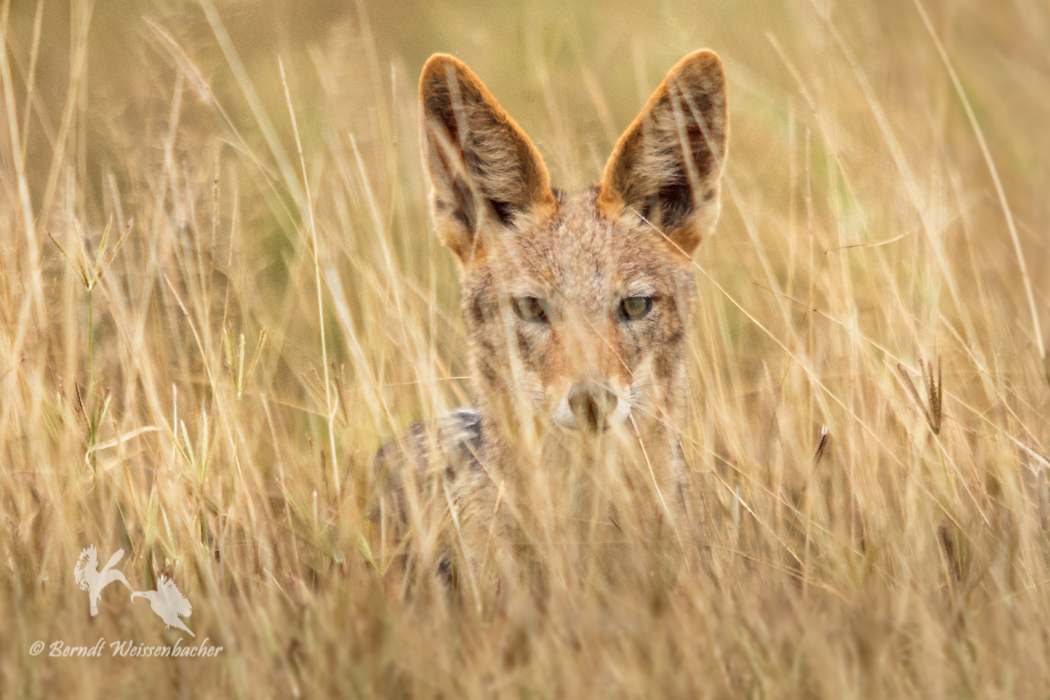
Nevertheless, on our first morning drive, we spotted a single Black-backed Jackal male running through a sizeable open area. Upon our return from our first drive, a beautiful young female jackal had joined the male. This pair entertained us with their antics most mornings and most evenings, performed as a duo or singly. Knowing of their presence reduced the need to pursue sightings and capture images of wildlife in the gloomy and wet conditions. When the jackals decided to show themselves, we simply spent the morning or evening in their presence; when the pair had gone into hiding or were traipsing around further afield, Jacqui and I continued with an extended drive.


This image is Copyrighted © Berndt Weissenbacher/BeKaHaWe. If you like it, you may share this image as presented here under a Creative Commons Attribution-NonCommercial-NoDerivs 3.0 License (CC BY-NC-ND 3.0). NO OTHER USE OF THIS IMAGE is permitted without the express consent of the photographer.


Not much happened; we did not get to see unique or impressive jackal behaviour that week. Yet, being afforded the opportunity to concentrate on capturing this pair of jackals, I managed to collect several images – together they do reveal, at least, an inkling of what it takes to be a Black-backed Jackal.

Wednesday, 24 June 2020

WILD IMAG(E) IN A(C)TION: IV – Composition and Style


In this final blog in the series, I will mention briefly a few thoughts on the most demanding aspects of photography, namely composition and the development of your own, personal vision and style.


7.         An eye for an eye

If you accept that photography is an important medium of visual communication for your thoughts, feelings and intentions, you will acquire and advance your own unique style. This is inevitable since so much of your own being will shape your way of seeing and the images that you think are worthwhile capturing. While your own distinctive approach to your chosen subject(s) will evolve (and consequently your own style too), the first hurdle that needs to be vaulted is the development of your photographic vision.


This image is Copyrighted © Berndt Weissenbacher/BeKaHaWe. If you like it, you may share this image as presented here under a Creative Commons Attribution-NonCommercial-NoDerivs 3.0 License (CC BY-NC-ND 3.0). NO OTHER USE OF THIS IMAGE is permitted without the express consent of the photographer.


In order to acquire, elaborate, and hone your personal vision, you need to be an active photographer all of the time. Much work can be done even though opportunities for taking photographs are absent. Careful composition is the key to any image that carries punch. Mastering composition requires constant practice. Even though you spend much more time away from your equipment than you do peering through the viewfinder, you still need to carry on looking, envisioning, imagining, and practising composition, whether you are engaged in taking photographs or not.


This image is Copyrighted © Berndt Weissenbacher/BeKaHaWe. If you like it, you may share this image as presented here under a Creative Commons Attribution-NonCommercial-NoDerivs 3.0 License (CC BY-NC-ND 3.0). NO OTHER USE OF THIS IMAGE is permitted without the express consent of the photographer.


No matter where you find yourself at any one moment, no matter what you are busy doing at any one time, be mindful of visual elements (line, shape, texture, pattern, rhythm) in your environment at all times. Pore over forms and angles; see how they change with changing viewpoint and changing light conditions. In any scene, consider how different planes (of depth, tonal value, colour, for example) could interact if you were to frame only a part of the view. Get to know light and shadow, how they fall and change. For practice, the subject matter is not important. The rear-view or the wing mirror of your car can be very engaging while you are on the highway – use it as a surrogate camera frame to pick and choose compositions that are emerging there.


This image is Copyrighted © Berndt Weissenbacher/BeKaHaWe. If you like it, you may share this image as presented here under a Creative Commons Attribution-NonCommercial-NoDerivs 3.0 License (CC BY-NC-ND 3.0). NO OTHER USE OF THIS IMAGE is permitted without the express consent of the photographer.


Look at and scrutinise images constantly (be they doodles, sketches, paintings, advertisements, the images of other photographers and, especially, your own works). How do they affect you? Re-crop them in your imagination. Think about how changes in composition would affect the impact of the presented images. What do they express in their original presentation, what do they say after a new choice of image format? Think about what you would have done given the same subject and the same conditions that were faced by the photographer whose image(s) you are perusing. (A caveat concerning this last point: it is not expedient to express these thoughts in comments about someone else’s work. These thoughts are for you alone, unless you are asked to express such an opinion explicitly by the photographer. Always err on the side of civility, and assume that the photographer intended the image to look as it does in its presented form. This is an exercise for yourself and for the honing of your own visual literacy.)


This image is Copyrighted © Berndt Weissenbacher/BeKaHaWe. If you like it, you may share this image as presented here under a Creative Commons Attribution-NonCommercial-NoDerivs 3.0 License (CC BY-NC-ND 3.0). NO OTHER USE OF THIS IMAGE is permitted without the express consent of the photographer.


Keep yourself busy incessantly, working hard on your way of seeing and on your own competence at visual literacy – and, above all, keep on previsualising.


8.         Rules? What rules? My vision rules!

It is obvious that some ‘rules’ of composition are appropriate and work adequately for most average pictures. This is simply an outcome of our own eyes and the internal visual processing mechanisms in our brains themselves being prescriptive (for example, only ROYGBIV wavelengths; a field of vision that adheres roughly to a 3:2 ratio; very shallow depth of focus balanced by amazing speed of readjustment; average contrast, again achieved by prompt regulation of the visual mechanisms). The way we see is compelled by structural and physiological adaptations and constraints of our own biological apparatus and processes. Given that all of us see the world using our very similarly restricted visual mechanisms, it is no wonder that we have ended up with ‘the rule of thirds’, ‘the centre of the image is weak’, ‘red is hot and aggressive’, etcetera.


This image is Copyrighted © Berndt Weissenbacher/BeKaHaWe. If you like it, you may share this image as presented here under a Creative Commons Attribution-NonCommercial-NoDerivs 3.0 License (CC BY-NC-ND 3.0). NO OTHER USE OF THIS IMAGE is permitted without the express consent of the photographer.


These ‘rules’ of composition are only very rough guidelines that achieve an average impact (at best) on ourselves and on an audience of our images at best. These ‘rules’ are very much hard-wired into the machinery and machinations of our visual system. Luckily, our vision is not governed only by physical and neurophysiological mechanisms. We are all emotional beings, individuals whose vision depends besides on the emotional states of our brains, our experiences and our imagination. Our emotions are capricious, our experiences expansive and our imagination boundless – in its entirety, our vision gives us access to a far more interesting and sinuous ‘reality’.


This image is Copyrighted © Berndt Weissenbacher/BeKaHaWe. If you like it, you may share this image as presented here under a Creative Commons Attribution-NonCommercial-NoDerivs 3.0 License (CC BY-NC-ND 3.0). NO OTHER USE OF THIS IMAGE is permitted without the express consent of the photographer.


Balance or imbalance of the various visual elements that will make up an effective arrangement and the control of depth of the final composition remain indispensable in any good image. However, as to how these effects are achieved remains firmly rooted in personal style and expression, and in the subject matter itself. One tenet is clear: the greater the number of visual elements you wish to incorporate in your final selection (in other words, the more interesting your image promises to be), the more care you need to take with composition – otherwise, the potential peters out in clutter.


This image is Copyrighted © Berndt Weissenbacher/BeKaHaWe. If you like it, you may share this image as presented here under a Creative Commons Attribution-NonCommercial-NoDerivs 3.0 License (CC BY-NC-ND 3.0). NO OTHER USE OF THIS IMAGE is permitted without the express consent of the photographer.


The most demanding aspect of photography (and all other visual media) to master is to learn how to use and manipulate the impact of all the visual elements to achieve communication of your intentions through your photographs. Undoubtedly, the key lies in ceaseless observation and practice. Practice makes perfect, so they say; at least it can prevent a repeat of mistakes made previously.

**********

This series of blogs has raised many more questions than it has provided answers. Perhaps deliberately so, because, by providing simple answers, your own unique photographic process – from imagination, to image, to the audience's imagination – may become severely stilted. So, whatever you do, do it your way, and let us, the viewers, interact with you and your images through your own, unique and very special photography. 

The romantic vision of a photographer's life involves endless travel and endless pleasure. My own personal experience is that photography is physically tiring, emotionally draining, frustrating and a challenge that requires total dedication and an endless imagination. Like all human endeavour it is very hard work. Nevertheless, it is work that is oh so, so, so sweet when the image finally clicks.


Wednesday, 17 June 2020

WILD IMAG(E) IN A(C)TION: III – The Photographic Process


In this series, I discuss briefly a few ideas and my own thoughts on the subject of photography (particularly, but not limited to, of fauna, flora and the environment). This is the third instalment in the series and deals with aspects of the photographic process.


4.         The image is king, technique just a pawn

Once you know what you wish to express about a particular subject or scene, once your observation is ready to be transformed into a photograph, then, and only then, should technique take over. Of course, beforehand you need to become competent with any techniques you will be using; you will have to know and understand too any and all of your camera’s settings (and how to change and select them). However, any decision about the appropriate camera-lens combination, your intended viewpoint selection, the appropriate ISO (ASA) rating of the camera’s sensor (film type selection if you are using film), the appropriate f-stop and the appropriate exposure time for your final intended image can only be taken once you can envisage, ‘see’, the final image in your mind.

This image is Copyrighted © Berndt Weissenbacher/BeKaHaWe. If you like it, you may share this image as presented here under a Creative Commons Attribution-NonCommercial-NoDerivs 3.0 License (CC BY-NC-ND 3.0). NO OTHER USE OF THIS IMAGE is permitted without the express consent of the photographer.


For the vast majority of images you wish to capture, your interpretation does not require more than the correct use of the appropriate equipment and camera settings. Always remember that YOU are the visionary; a camera does not see, it has no vision of its own, it can not compose an image. Gadgets and tricks rarely enhance the visual communication in my opinion. Does your interpretation really require the use of a filter? (It may – then use it knowledgeably.) Does your intended final image require fill-in flash or the use of a strobe, or can you rely solely on the existing natural light? (Invariably I pose this question when I am busy with macrophotography.) Does the way you are using your drone, your miniature action-camera, your radio-controlled camera-buggy enhance your photographic communication, or are you using them simply because you have seen other photographers use such equipment?

Of special relevance here is digital post-processing and photo-manipulation. “Shoot in RAW and you can complete the photographic process, fix the image later,” is an oft quoted adage. You can then delete what should not be there, add in what should have been included, change the lighting and the background; you can even combine species together that would not normally interact – a polar bear hunting a penguin, let us say – and, voila, you have an image that simply blooms. Alternatively, you can just download images from the web and use those; you then save yourself the hassle of all that travel, the sweat and the tears, the hard work. This has happened and does happen still.
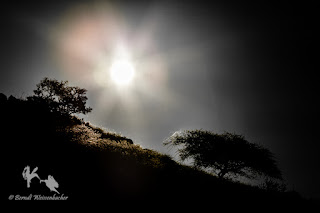

This image is Copyrighted © Berndt Weissenbacher/BeKaHaWe. If you like it, you may share this image as presented here under a Creative Commons Attribution-NonCommercial-NoDerivs 3.0 License (CC BY-NC-ND 3.0). NO OTHER USE OF THIS IMAGE is permitted without the express consent of the photographer.


Do not misunderstand; all digital images have to be processed, more or less so, after capture. With digital files, the amount of post-processing depends on your interpretation of the subject and on your intentions that you wish to communicate through the photograph. Used to these ends, digital processing is no less necessary than the chemical development of film (which process is also manipulated to achieve specific, enhanced qualities in the negative for printing of the final image). Moreover, digital manipulation allows for easy access to processes that in the past were difficult to achieve, for example, black-and-white processing and printing, the use of bas-relief, solarisation and other (formerly) darkroom techniques.


This image is Copyrighted © Berndt Weissenbacher/BeKaHaWe. If you like it, you may share this image as presented here under a Creative Commons Attribution-NonCommercial-NoDerivs 3.0 License (CC BY-NC-ND 3.0). NO OTHER USE OF THIS IMAGE is permitted without the express consent of the photographer.


Nevertheless, whatever manipulation you intend to perform after releasing the shutter should have been considered and should be part of your initial previsualisation. All manipulation should remain part of the process of communication and must enhance the final image and the resulting stimulation that it will provide the viewer’s imagination. So your digital file (or film negative), captured at the moment you released the shutter, should be as close to the final, imagined image as it can possibly be. Manipulation alone can not create a more polished product from a badly conceived, poorly executed picture file or negative.

A further possible hick-up in your voyage as a photographer concerns whether and how much of the information provided by others you wish to incorporate into your own technique and style. Reading about another photographer's techniques is fun and can provide you with valuable clues for use in your own photo-interpretation. You may discover new ways of doing things technically. While reading you may suddenly think of a simple way to tweak your own photography. However, this information alone, taken on board willy-nilly without careful consideration, will not make you a better photographer. What works well for others may not work for you. The great danger in adopting technique as gospel is, of course, that it will set you firmly on the road to simple copying (and frustration – you may never possess that lens, that camera, that gadget!).
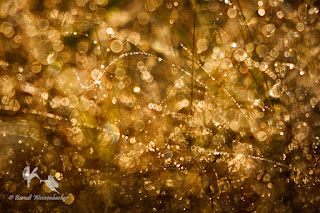

This image is Copyrighted © Berndt Weissenbacher/BeKaHaWe. If you like it, you may share this image as presented here under a Creative Commons Attribution-NonCommercial-NoDerivs 3.0 License (CC BY-NC-ND 3.0). NO OTHER USE OF THIS IMAGE is permitted without the express consent of the photographer.


Nothing beats previsualisation. Nothing beats your own attempt at interpretation. If you are serious about the process of photography, nothing beats your own (limited, exciting, hampered, excellent, inadequate, competent, disillusioning, emotionally satisfying, challenging, sensational) stimulation of the imagination to seek out and capture good photographs.


5.         It was the hammer!

Competent photographers will create exciting images with homemade cereal-box pinhole cameras. So do not blame your tools – ever. Granted, if you do not possess long glass you will never get an image of a leopard's eye on free range, but you might get the eye of a Leopard Toad. This may equally fulfil your needs and your intention. Know your equipment, both its limitations and its strengths, and shape or adapt your vision accordingly. Use your equipment’s strengths and your own to maximum effect; explore and find ways to lessen the limitations. If necessary, hire equipment and rather spend your hard-earned cash on memory cards (or film), extra batteries and, most importantly, more regular opportunities to create photographs.
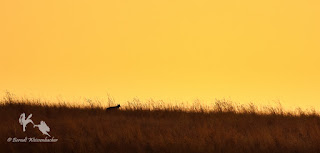

This image is Copyrighted © Berndt Weissenbacher/BeKaHaWe. If you like it, you may share this image as presented here under a Creative Commons Attribution-NonCommercial-NoDerivs 3.0 License (CC BY-NC-ND 3.0). NO OTHER USE OF THIS IMAGE is permitted without the express consent of the photographer.


If you really find yourself in a situation where you consider a specific piece of equipment to be indispensable (and you simply do not have access to it), re-visualise, re-compose, but do not walk away from the possible subject or opportunity. You may not be able to capture the image you initially intended to take, but you may get a dozen or more photographs that are equally exciting simply by changing your attitude and motivation. So often photographers miss opportunities. Been there!


6.         Twenty metres back and six steps left

If you embrace photography as a form of visual communication, you will develop your own personal style. Your own vision depends not on how different you can make your photographs, but rather on how you feel about and approach your subject matter differently. Your imagination is not the consequence of your photographs; imagination precedes expression and so your personal style develops from, and is the consequence of, your own, unique imagination. (In the mind of the audience, the process is reversed, of course, as your style and your images elicit novel responses in the viewer's imagination.)
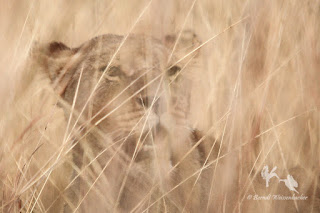

This image is Copyrighted © Berndt Weissenbacher/BeKaHaWe. If you like it, you may share this image as presented here under a Creative Commons Attribution-NonCommercial-NoDerivs 3.0 License (CC BY-NC-ND 3.0). NO OTHER USE OF THIS IMAGE is permitted without the express consent of the photographer.


How many photographs of lion (closely cropped, side-on, glint in the eye, four feet visible, tail up, background blurred to non-existence) can you recall? Thousands, if you could remember them all. What do all these images express? This is a lion, full stop! Sadly, however, the being itself – the majesty, the power, the hunger in the hunter – has been left behind in the veld. Know what you want to express. Change your point of view, try a different angle, a different perspective and, above all, change your interpretation. Then you will begin to communicate by way of your images.

This image is Copyrighted © Berndt Weissenbacher/BeKaHaWe. If you like it, you may share this image as presented here under a Creative Commons Attribution-NonCommercial-NoDerivs 3.0 License (CC BY-NC-ND 3.0). NO OTHER USE OF THIS IMAGE is permitted without the express consent of the photographer.


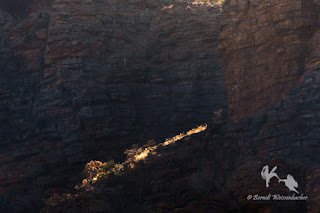
Back off! Including the environment and incorporating some of its elements (lines, shapes, rhythms, textures) in the composition, will invariably make for a more interesting interpretation of the subject. Isolating your subject from the background by using a long focal length and choosing a shallow depth-of-field is not the only way to give it pre-eminence in your image. Similarly, landscapes do not need to be crisp front-to-back, nor do they have to be captured with a wide-angle lens. Often an intimate glimpse of a part of the landscape reveals so much more than the wider panoramic view would do. Experiment, maximise your expressive communication and satisfy your individual vision.

Tuesday, 9 June 2020

WILD IMAG(E) IN A(C)TION: II – You and Your Images


In this (and the next two) blogs in this series, I will mention and discuss very briefly a few opinions and suggestions on the subject of photography (particularly, but not limited to, of fauna, flora and the environment). I revisit these musings regularly to remind myself repeatedly that I need to keep on honing my craft. The points I raise in this blog deal with my readiness and attitude as a photographer.


1.         Are YOU in the picture?

Photography is just as much about knowing yourself as it is about knowing the technicalities of the photographic process and knowing your subject. An exciting image will reflect your ideas, your passions, and your interaction with and response to the subject matter.


This image is Copyrighted © Berndt Weissenbacher/BeKaHaWe. If you like it, you may share this image as presented here under a Creative Commons Attribution-NonCommercial-NoDerivs 3.0 License (CC BY-NC-ND 3.0). NO OTHER USE OF THIS IMAGE is permitted without the express consent of the photographer.


The process of capturing an image starts with a personal observation and is followed by a deliberate selection of what must be included and what must be excluded from the frame to ‘create’ the final composition. The final, chosen image is selected deliberately from among the infinite number of other possible compositions that confront you. As the photographer, you decide exactly which smidgen of the reality that you are looking at to include in the photograph – all else, the rest of reality, is excluded from the frame. As a consequence of your decisions, you yourself become a vital ingredient in any photograph that you capture.

You will communicate much about yourself to your audience. What is it that attracted you to that particular selected image? How do you feel about the subject you are photographing? What interpretation(s) are you giving to your observation? You can simply state, “This is exhibit A”. But you could also state, “This is exhibit A and ... because ... since ...  So, viewer, take a second, closer and longer look!” All great images force the viewer to do the latter, and all lasting images give us hints about the photographer's state of mind. Thus the photographer's observation, interpretation and intention are transmitted to the audience via the image.


This image is Copyrighted © Berndt Weissenbacher/BeKaHaWe. If you like it, you may share this image as presented here under a Creative Commons Attribution-NonCommercial-NoDerivs 3.0 License (CC BY-NC-ND 3.0). NO OTHER USE OF THIS IMAGE is permitted without the express consent of the photographer.


Always remember that the audience you wish to entice to spend some time looking at your photographs is intelligent and visually literate to a high degree. This is the audience you want to attract, the individuals with whom you wish to communicate. These are the people who will give you the necessary feedback about your success and standing as a photographer. More importantly, they will show you how you can develop and refine your craft further still.


2.         Ah, there you are!

All images with impact have been previsualised to a greater or lesser degree. A good photographer understands her intentions and is searching her surroundings constantly for the next final selection that will be captured as a photograph. Such previsualisation (which requires much imagination and thought) is a bit easier to engage in with a static subject or one that can be manipulated and controlled in the studio or even outdoors, a subject that does not vanish in an instant. However, even in environmental photography, which relies very heavily on chance and split-second decision-taking, the good photographer knows beforehand what she is seeking. “This is the image that would satisfy my need to express myself about this subject. How do I go about finding and capturing it?” “This is what I need to say. What composition will convey this message best?” Even if previsualisation is as brief as “How can I best use this splendid light?” or “Where can I go from here to get the best shot?”, visual preparation is vital. You need to ‘see’ the image in your imagination before you attempt to capture it.


This image is Copyrighted © Berndt Weissenbacher/BeKaHaWe. If you like it, you may share this image as presented here under a Creative Commons Attribution-NonCommercial-NoDerivs 3.0 License (CC BY-NC-ND 3.0). NO OTHER USE OF THIS IMAGE is permitted without the express consent of the photographer.


Effective previsualisation requires planning. Merely travelling around, seeing what you can snap up is challenging and fun, but without previsualisation this process will always remain one of documentation only. Before you travel to any destination in search of photographs (even your own backyard) or, failing that, while you are already on the way, ask yourself a few questions to kick-start the process of previsualisation.

If you are travelling to a known destination, plan carefully. “What am I likely to encounter and where? What is it that I am hoping to find? What could happen? What could I see? How will I be affected by my travel experience?” On the other hand, if the destination is new to you, questions should likely be “Why am I going there? What can I expect? What will happen if...?”

Previsualisation also means knowing your subject well, be it a person, an inanimate object, a place, a landscape, or a particular species that you are after, for example. Your subject may solely be the light or it may be a process that you wish to capture and share in an image. What do you want to express? What intrigues you? What is your opinion on the matter? What is it about this subject that took your breath away initially?


This image is Copyrighted © Berndt Weissenbacher/BeKaHaWe. If you like it, you may share this image as presented here under a Creative Commons Attribution-NonCommercial-NoDerivs 3.0 License (CC BY-NC-ND 3.0). NO OTHER USE OF THIS IMAGE is permitted without the express consent of the photographer.


There are dangers involved with previsualisation. Never become too rigid in your response to a situation because of your previsualisation. Never miss those images that simply PING! unexpectedly. Never despair because the weather or the light are not what you had hoped for, or because your favourite species has not appeared. Use the prevailing conditions and start previsualising anew. Effective previsualisation is an unceasing and fluid activity. Always leave room for those most magical of ingredients, spontaneity and serendipity.

3.         Oops! Are you here too?

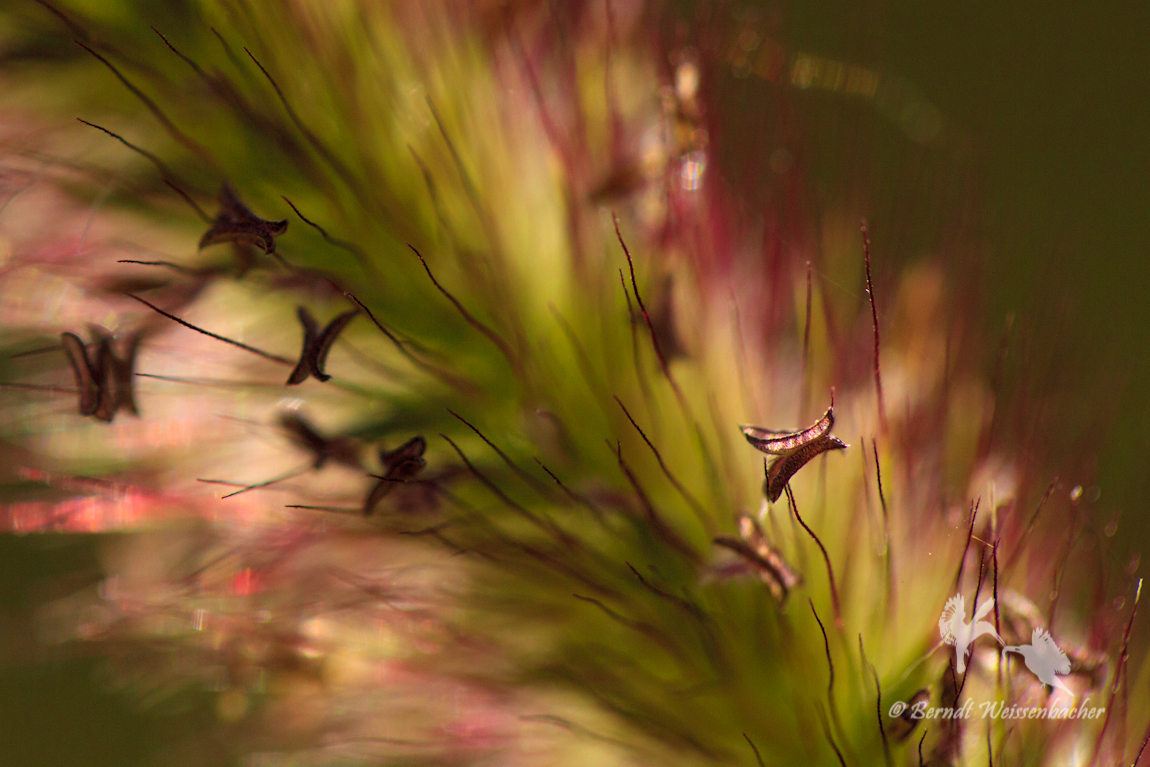
By choice, I call myself an environmental photographer. My subject matter includes the fauna and flora, as well as the patterns and processes of the environment in which they are embedded. This third point of the blog applies particularly to photographers with a similar interest. However, with a little thought and application, the point can be applied to almost all photographic subjects or genres.


This image is Copyrighted © Berndt Weissenbacher/BeKaHaWe. If you like it, you may share this image as presented here under a Creative Commons Attribution-NonCommercial-NoDerivs 3.0 License (CC BY-NC-ND 3.0). NO OTHER USE OF THIS IMAGE is permitted without the express consent of the photographer.


There is a glut of wildlife and landscape photography in the media and on the market. Some of it is excellent; some of it is valuable as natural history documentation. Sadly, the overwhelming majority of images on display (particularly on social media) simply do not qualify as good photographs because they do not engage the viewer actively; they communicate very little – other than the obvious identification of a particular subject.

This mind-numbing bombardment of pictures can become overwhelming and discouraging (if not infuriating) for many reasons. For me there are two important challenges that confront photographers that are at the start of their photographic journey (particularly so young photographers). Faced with this stream of snaps, you need to remind yourself that only a small subset of people who use a camera (in the broadest sense of any available image-capturing device) actually comprises photographers. Always go out of your way to illicit feedback (positive and negative) from the photographers you admire the most. Judging your ‘success’ (or otherwise) by the number of ‘likes’ that your images attract on social media platforms is misguided at best. Chasing hollow praise can become debilitating and can become ruinous to the development and enhancement of any real talent. It is never the number of likes, comments, friends or followers (on social media particularly) that will indicate in any meaningful and helpful way your competence and growth as a photographer – these indicators will simply tell you how popular you are. Rather, it is a matter of WHO has given you a positive comment, encouragement or constructive criticism. The honest opinion of a good photographer outweighs all else.


This image is Copyrighted © Berndt Weissenbacher/BeKaHaWe. If you like it, you may share this image as presented here under a Creative Commons Attribution-NonCommercial-NoDerivs 3.0 License (CC BY-NC-ND 3.0). NO OTHER USE OF THIS IMAGE is permitted without the express consent of the photographer.


Also, remember that the public (which may or may not include competent photographers) will be wowed for all time by depictions of certain ‘subjects’, irrespective of the photographic merit of the pictures. Cats, dogs, kids, breakfast meals, even cups of coffee come to mind immediately. Amongst wildlife ‘photographers’ it tends to be the large predators. (In South Africa, it is leopards – nowadays they have also been given names. I wonder what the leopards call photographers? I have a few choice suggestions that I shall keep to myself!)

As a serious photographer, do not overlook the obvious. Much that needs to be expressed about the environment and its inhabitants rests with the little guys. There exists an endless variety that is important and must be spoken about. (Yes, I do know that the little guys do not sell well, but so what!)


This image is Copyrighted © Berndt Weissenbacher/BeKaHaWe. If you like it, you may share this image as presented here under a Creative Commons Attribution-NonCommercial-NoDerivs 3.0 License (CC BY-NC-ND 3.0). NO OTHER USE OF THIS IMAGE is permitted without the express consent of the photographer.


Include processes in your visual repertoire. It is obvious that showing action or depicting an ecological relationship between individuals may hold more interest for the viewer. However, consider too the effect of abiotic processes on the fauna, flora and environment – rain, wind, wave action, the effect of changing light conditions, for example. Again, the variety (and the delight at seeing and communicating something new) is endless.