Showing posts with label predation. Show all posts

Friday, 4 December 2020

ON PHOTOGRAPHY: Maximising the Odds of Photographic Expression – 1. Being a Black-backed Jackal


At the end of this year (2020), I will have pursued my singular passion for photography for a full five decades. Although my focus as an exclusively environmental photographer (as I call it) is very narrow, I would like to regard myself as a serious photographer first, and then as a crafter of images of the environment, its flora and its fauna.


This image is Copyrighted © Berndt Weissenbacher/BeKaHaWe. If you like it, you may share this image as presented here under a Creative Commons Attribution-NonCommercial-NoDerivs 3.0 License (CC BY-NC-ND 3.0). NO OTHER USE OF THIS IMAGE is permitted without the express consent of the photographer.


My second great passion, which has compelled me for almost as long as photography has, is the experience, exploration and research of the interplay between organisms (especially animals) and their environment. In my view of the natural world, individual beings fit into their species-specific habitat much as a hand occupies a glove – except that in this instance the ‘glove’, the environment, is immeasurably larger than the organism itself is. There is also interaction and exchange of vital information and substances between the organism and its environment. It is this sense of the embeddedness of individuals within their habitat that I wish to explore and capture in images.


This image is Copyrighted © Berndt Weissenbacher/BeKaHaWe. If you like it, you may share this image as presented here under a Creative Commons Attribution-NonCommercial-NoDerivs 3.0 License (CC BY-NC-ND 3.0). NO OTHER USE OF THIS IMAGE is permitted without the express consent of the photographer.


As a photographer, I consider myself as an explorer, not of reality, but of light and shadow, line, shape and form, texture and tone, pattern and rhythm, and of how these visual elements will contribute to the expression of my intention in the final photograph. Most importantly, as a photographer I am a surveyor of the Self, an explorer of my own, unique internal world of the imagination.


This image is Copyrighted © Berndt Weissenbacher/BeKaHaWe. If you like it, you may share this image as presented here under a Creative Commons Attribution-NonCommercial-NoDerivs 3.0 License (CC BY-NC-ND 3.0). NO OTHER USE OF THIS IMAGE is permitted without the express consent of the photographer.


Photography is a most demanding craft to master. To capture the compositions and the quality of light in images that will complement your projected visual communication always requires forethought, skill and hard work; your success also depends greatly on chance if you work outdoors. Photography becomes even more serendipitous when the subject is an organism (or many) that can not be controlled. All photographers appreciate a second bite at the cherry (as they say), or, at least, they would hope for an extended episode during which they can explore several different compositions of the same setting, the identical subject, to maximise the chances of capturing at least one exceptional image. Such repetition of opportunity is especially rare when photographing fauna, flora and the natural environment.


This image is Copyrighted © Berndt Weissenbacher/BeKaHaWe. If you like it, you may share this image as presented here under a Creative Commons Attribution-NonCommercial-NoDerivs 3.0 License (CC BY-NC-ND 3.0). NO OTHER USE OF THIS IMAGE is permitted without the express consent of the photographer.


I search actively for images. I am not inclined to sit in a hide for hours, waiting and hoping for the arrival of an organism in a scene that I can not change. On foot or from a vehicle, I hunt for and pounce on special light or a photogenic sighting of my intended prey. However, when the prospect arises, two different, yet related circumstances afford me the greatest opportunity to delight in, observe, mull over, explore and toil at photography of the interplay between organisms and their habitat. Both situations, if available to me, provide several separate chances for capturing images of a particular subject. One approach, more difficult to seek out and to explore, involves the repeated sighting of a particular individual or a group of animals (the subjects). The alternative setting (which I will discuss in a follow-on blog) involves travelling to and spending time repeatedly in the same small locality (the place).


This image is Copyrighted © Berndt Weissenbacher/BeKaHaWe. If you like it, you may share this image as presented here under a Creative Commons Attribution-NonCommercial-NoDerivs 3.0 License (CC BY-NC-ND 3.0). NO OTHER USE OF THIS IMAGE is permitted without the express consent of the photographer.


The intentions of animals are unknowable by definition. At best, we may conclude from the current behaviour we witness what action is likely (usually hopefully) to follow; at worst, the behaviour of individuals or groups of animals is unpredictable. By spending some time in their presence, on several separate occasions, I can at least observe a number of episodes of behaviour. While not necessarily the same actions are ever repeated, at least different encounters allow me to observe the animal or group more attentively and to identify any patterns in the coming-and-going and their manners. Thus I can familiarise myself slightly with the animals’ environmental setting and their response to it. Their behaviour may remain unpredictable; at least the likelihood of me bagging a splendid photograph becomes marginally more probable. 


This image is Copyrighted © Berndt Weissenbacher/BeKaHaWe. If you like it, you may share this image as presented here under a Creative Commons Attribution-NonCommercial-NoDerivs 3.0 License (CC BY-NC-ND 3.0). NO OTHER USE OF THIS IMAGE is permitted without the express consent of the photographer.


Constantly I am on the lookout for burrows and nests to which animals will return regularly. I may not intend to photograph aspects of their reproductive behaviour, but I am a tad more confident that I will be able to spy (not necessarily photograph) my intended prey. During the heat of late mornings and early afternoons, waterholes or riverbanks will also attract animals – not necessarily the same individuals, however. In addition, speaking regularly to rangers or even tourists who have remained in an area for quite a while is useful. Most often, such people possess a wealth of knowledge of the area and its game, or, at least, they are wildlife enthusiasts and will share willingly any information they have about the localities that will proffer my best prospects of encountering certain species of animals. Even in the absence of burrows, nests, waterholes and informants, I have had many opportunities of spending some time in the company of particular individuals, getting several bites at digital photography. (Hehe… I apologise!)


This image is Copyrighted © Berndt Weissenbacher/BeKaHaWe. If you like it, you may share this image as presented here under a Creative Commons Attribution-NonCommercial-NoDerivs 3.0 License (CC BY-NC-ND 3.0). NO OTHER USE OF THIS IMAGE is permitted without the express consent of the photographer.


By now it is public knowledge that rain follows me wherever I happen to go on photographic trips. One April several years ago, Jacqui and I had splurged out to visit Tamboti Camp in the central region of the Kruger National Park, South Africa. Predictably, the rain pelted or drizzled down for more than a week – the light was less than ideal and sightings that could be worked and photographed were rare.


This image is Copyrighted © Berndt Weissenbacher/BeKaHaWe. If you like it, you may share this image as presented here under a Creative Commons Attribution-NonCommercial-NoDerivs 3.0 License (CC BY-NC-ND 3.0). NO OTHER USE OF THIS IMAGE is permitted without the express consent of the photographer.


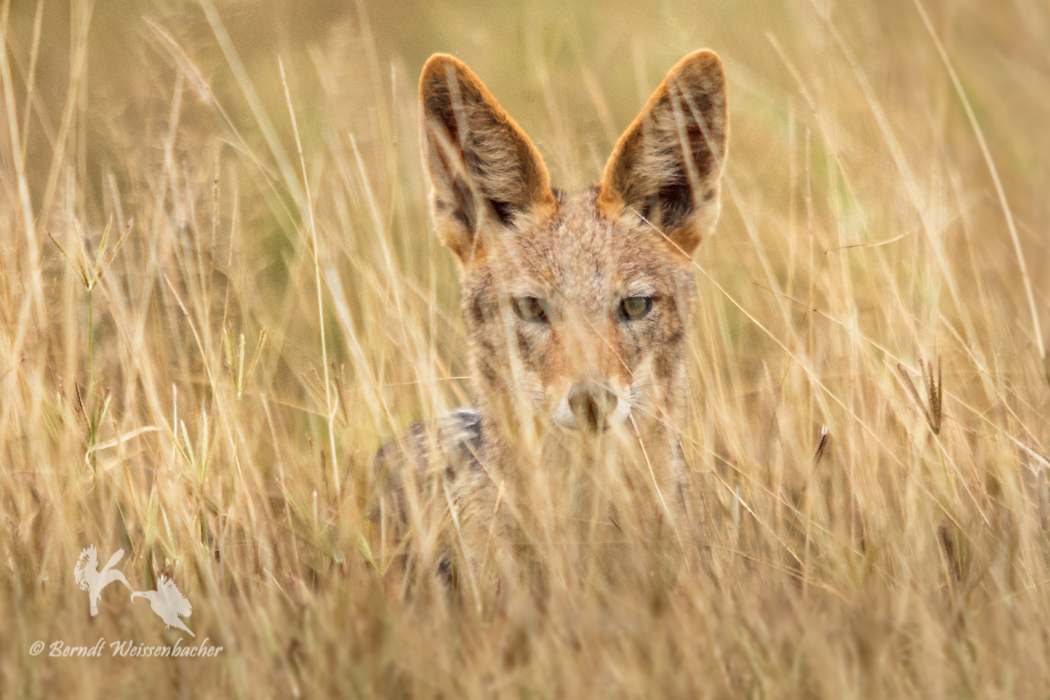
Nevertheless, on our first morning drive, we spotted a single Black-backed Jackal male running through a sizeable open area. Upon our return from our first drive, a beautiful young female jackal had joined the male. This pair entertained us with their antics most mornings and most evenings, performed as a duo or singly. Knowing of their presence reduced the need to pursue sightings and capture images of wildlife in the gloomy and wet conditions. When the jackals decided to show themselves, we simply spent the morning or evening in their presence; when the pair had gone into hiding or were traipsing around further afield, Jacqui and I continued with an extended drive.


This image is Copyrighted © Berndt Weissenbacher/BeKaHaWe. If you like it, you may share this image as presented here under a Creative Commons Attribution-NonCommercial-NoDerivs 3.0 License (CC BY-NC-ND 3.0). NO OTHER USE OF THIS IMAGE is permitted without the express consent of the photographer.


Not much happened; we did not get to see unique or impressive jackal behaviour that week. Yet, being afforded the opportunity to concentrate on capturing this pair of jackals, I managed to collect several images – together they do reveal, at least, an inkling of what it takes to be a Black-backed Jackal.

Thursday, 26 November 2020

REMINISCENCES: Sojourn in the Mountain-Lands of Kruger


In a previous blog, I mentioned and explained my devotion to the central and northern regions of the Kruger National Park, South Africa. I also pointed out several reasons why I had neglected the southern sections of this magnificent park during the past decades. Yet, following a very brief trip to the southwestern region of Kruger in early 2017, I had vowed to return before long to the previously shunned expanses of the park.

So, towards the end of 2018, Jacqui and I set off to spend a week at Berg-en-Dal Camp. This camp had been built in Kruger long after my childhood. It also featured a different style of architecture of the buildings, a shape and layout that was very different from the quaint rondavel circles of the older camps. Several other factors that impinge significantly on my enjoyment of the wilderness and any chances of snatching good photographs had kept me away from Berg-en-Dal previously.


This image is Copyrighted © Berndt Weissenbacher/BeKaHaWe. If you like it, you may share this image as presented here under a Creative Commons Attribution-NonCommercial-NoDerivs 3.0 License (CC BY-NC-ND 3.0). NO OTHER USE OF THIS IMAGE is permitted without the express consent of the photographer.


I spent quite a while mulling over the pros and cons of such a visit, before I finally resolved to stay over at Berg-en-Dal for a week. The camp is stationed very close to the entrance gate into Kruger at Malelane, which itself is very close to countless ‘safari lodges’ (without game!) crowded along the southern border of the park. Moreover, Malelane Gate is only a short drive away from the bustling city of Mbombela. This combination of circumstances ensures that throughout the day all the roads in the immediate vicinity of Berg-en-Dal carry heavy traffic – trucks carting supplies to the park’s southern camps, buses conveying staff into and out of the park, and day-visitors who are eager to traverse the greatest distance possible in limited time. Of course, my nemesis, the presence of countless safari lodge jeep-jocks and their noisy guests required exacting consideration.*


This image is Copyrighted © Berndt Weissenbacher/BeKaHaWe. If you like it, you may share this image as presented here under a Creative Commons Attribution-NonCommercial-NoDerivs 3.0 License (CC BY-NC-ND 3.0). NO OTHER USE OF THIS IMAGE is permitted without the express consent of the photographer.


Besides, the location of Berg-en-Dal Camp at the edge of the Malelane Mountain-land restricts the choice of any visitor (leaving the camp or returning to it) to a single decision – whether to turn left or to turn right at the camp’s entrance gate. Therefore, traffic close to camp is concentrated and increased dramatically in the earliest and latest hours of the day – precisely the time that is ideal for photography.

Despite grave reservations, I decided that I could not delay the opportunity to explore the hills and kopjes in this part of Kruger. For too long, I had abandoned the scenery, the many distinctive species of plants that grow in this region and an enjoyment of a different part of the Kruger National Park.


This image is Copyrighted © Berndt Weissenbacher/BeKaHaWe. If you like it, you may share this image as presented here under a Creative Commons Attribution-NonCommercial-NoDerivs 3.0 License (CC BY-NC-ND 3.0). NO OTHER USE OF THIS IMAGE is permitted without the express consent of the photographer.


Inevitably, I had packed some rain amongst our camping equipment – luckily, this time, a few mornings and afternoons remained clear enough for some splendid play of light and shadow. Notwithstanding the crowds and the rain, we enjoyed a most wonderful trip. Our luck with photogenic sightings was astonishing – no doubt, the presence of my lucky game-spotting charm bolstered our luck; my youngest sister, Bärbel, joined us on this trip. Each day confronted us with exceptional sightings of game and photographic opportunities. Our short trip was so packed with excitement that we even forgave the camp’s resident baboon troop after it had ripped through (not opened) our tents – one side wall of our two, small tents each were aerated by metre-long tears, despite us storing all food safely inside our locked vehicle, day and night.


This image is Copyrighted © Berndt Weissenbacher/BeKaHaWe. If you like it, you may share this image as presented here under a Creative Commons Attribution-NonCommercial-NoDerivs 3.0 License (CC BY-NC-ND 3.0). NO OTHER USE OF THIS IMAGE is permitted without the express consent of the photographer.


The roads through the mountain-lands were fabulous. The numerous densely-vegetated gullies between smaller hills, the narrow expanses of flat land bordered by the boulder-strewn slopes of some kopjes across which the roads threaded their way, and the many views of majestic hills and a few mountains enthralled us. Each drive along these steeper, winding sand roads provided large herds of buffalo and elephant. The recent decline of the lion population in the southern section of the park meant that we could not travel without lurching into leopards along the bases of kopjes and along the many smaller rivers and vleis on the flatter plains around Berg-en-Dal.


This image is Copyrighted © Berndt Weissenbacher/BeKaHaWe. If you like it, you may share this image as presented here under a Creative Commons Attribution-NonCommercial-NoDerivs 3.0 License (CC BY-NC-ND 3.0). NO OTHER USE OF THIS IMAGE is permitted without the express consent of the photographer.


The assortment of stunning sightings of game in the picturesque landscape that surrounds Berg-en-Dal kept me quickened and very busy every day. Animals, plants and the landscape enveloped me. For once, I trundled across several photographic opportunities that I could work earnestly to capture in images at least a few impressions of this splendid environment. I even managed to spend twenty minutes or so in the company of a young honeybadger that was busy excavating a large dung-pile for juicy beetle grubs.


This image is Copyrighted © Berndt Weissenbacher/BeKaHaWe. If you like it, you may share this image as presented here under a Creative Commons Attribution-NonCommercial-NoDerivs 3.0 License (CC BY-NC-ND 3.0). NO OTHER USE OF THIS IMAGE is permitted without the express consent of the photographer.


A hefty storm that showered Berg-en-Dal for an hour one night, caused runoff from the slopes of the hills to start flowing down smaller gullies and rivers. From a bridge, we spotted a huge crocodile fishing below the low wall of an overflowing weir. Regularly, Sharp-tooth Catfish and minute Barbs attempted to leap up the rushing water to get over the river blockage to a fast-filling pool upstream of the weir.


This image is Copyrighted © Berndt Weissenbacher/BeKaHaWe. If you like it, you may share this image as presented here under a Creative Commons Attribution-NonCommercial-NoDerivs 3.0 License (CC BY-NC-ND 3.0). NO OTHER USE OF THIS IMAGE is permitted without the express consent of the photographer.


At very early dawn and late dusk, Lesser Galagos (bushbabies) vaulted through the vegetation, tree-to-bush, bush-to-tree, past our camping spot to entertain us daily. At dawn on the morning of our last full day in the park, I spotted an adult bushbaby perched on a sturdy branch of an old dead tree. This parent was calling softly to a youngster that was still hiding in a very dense shrub. I backed off and waited patiently at some distance until I had seen both bushbabies entering a hollow of the dead tree. That evening we returned to camp slightly earlier than usual – I desperately wished to photograph these mini-humans as they left their hollow tree trunk to forage the night away out in the dark bushveld. I managed to snap only a single exposure.


This image is Copyrighted © Berndt Weissenbacher/BeKaHaWe. If you like it, you may share this image as presented here under a Creative Commons Attribution-NonCommercial-NoDerivs 3.0 License (CC BY-NC-ND 3.0). NO OTHER USE OF THIS IMAGE is permitted without the express consent of the photographer.


I remain convinced that I will not be able to put up with the traffic and the crowds of the southern Kruger for an extended time. Yet, I have decided that the areas and camps that I have avoided for so long must be included from now on, albeit only for short visits.


*   Perhaps I need to explain why I loathe much (not all) of the so-called safari and purported conservation ‘industry’ in South Africa. The most significant source of my boundless detestation of this ‘industry’ is the unacceptable attitude of the majority of citizens – South Africans are renowned for exploitation of the wilderness. If money is to be made, all thoughts and considerations of conservation and ethics evaporate. There are countless examples that populate a list that is too long to discuss here in its entirety. Well documented examples include: the illegal import and export of rare and endangered species (animals and plants), the deliberate breeding of colour morphs of various species (primarily antelope) for hunting clients (individuals whose egos have become satiated by the slaughter of the available ‘common’ game, so that they now covet a unique, special victim), canned lion hunting, many other questionable hunting ethics (such as allowing clients to shoot game at waterholes or salt licks, the use of hides or vehicles from which to blast forth), ad infinitum.
 
One of the less offensive, yet equally questionable practices involves the concept of game and safari lodges and reserves. There are laudable proprietors who are indeed sincerely concerned and immersed in efforts of conservation of the total environment. However, the majority of ‘reserves’, ‘parks’, ‘zoos’, ‘lodges’ are frankly money-generating endeavours in a country that believes generally that ‘ecotourism’ is a valuable, honourable and necessary facet of the economy. This is an ‘industry’ that does not add value to a product of human intellect, discovery, manufacture and labour – rather, this industry simply affixes a spurious price tag to the rapacious exploitation (most often detrimental) of the environment and its inhabitants. There is simply no understanding that the wilderness has existed for millennia, without human assistance, despite ceaseless abuse by humanity. The wilderness exists; it is not a product of human ingenuity, skill or exertion. The smidgeon of wilderness that remains must continue to exist – to ensure that the planet remains habitable for a sizeable fraction of the biosphere (including humans), not for trade by a single, self-elected, self-aggrandising, renegade pest species.
 
The ‘safaris’ on offer usually do not provide an experience of wilderness; nor do they provide for an adequate understanding of the necessity of conservation. Rather, they are glorified, glamourized and pared down rattles through the ‘wilds’, hollow attempts at completing a tick list of game sightings, not filled out by a slow, deliberate and untiring search of the environment, but by travelling at the highest speed possible from one incident to the next, following the instructions of a radio operator. This is not game-spotting; this is not an experience of wildlife and the wild. Worse still, the running commentary provided by ‘expert guides’ in the majority of cases is based entirely on providing info-bites enclosing a certain wow-factor, using outdated and faded information, much of it false.
 
There! I shall stop now.


Tuesday, 24 November 2020

ABOUT THIS IMAGE… ‘The Hunter and the Hunted’


I have a vivid memory from my boyhood days of catching sight in a photography magazine of a dramatic image of a Black-backed Jackal hunting Cape Turtle-Doves at one of the many water holes along the Auob River in the then Kalahari Gemsbok National Park (now the Kgalagadi Transfrontier National Park) in the Northern Cape Province of South Africa. The photograph left an indelible impression on me at the time. The jackal was shown in full flight, jaws wide open, about to snap shut on a turtledove, one of many that had exploded upwards from the waterhole. The drama was captured at just the right moment; no contact had yet been made between hunter and prey, yet the image left no doubt about the inevitable outcome – the turtledove would be snatched despite its frenzied breakaway and the jackal would have its meal.

Sadly, I can not recall the photographer who portrayed this drama (and I apologise for this lapse of memory). Since this iconic instant was captured on slide film (in good light, with appropriate exposure and exceptional composition and drama), countless photographers repeatedly have attempted to recreate this singular image – none has succeeded to get it just right. Inevitably, the numerous published attempts have depreciated some of the uniqueness of the original photograph, yet it remains outstanding and unequalled to this day.


This image is Copyrighted © Berndt Weissenbacher/BeKaHaWe. If you like it, you may share this image as presented here under a Creative Commons Attribution-NonCommercial-NoDerivs 3.0 License (CC BY-NC-ND 3.0). NO OTHER USE OF THIS IMAGE is permitted without the express consent of the photographer.


Once glimpsed, many exceptional images are stored away safely in a corner of my mind. I reimagine them repeatedly for their sheer brilliance of circumstance, camera technique and photographic vision. These outstanding achievements act as a constant reminder to myself to up my own game, to refocus and to re-sharpen my own interpretation of selected scenarios in nature and to hone my own personal vision in photography.

Several years ago, I had the good fortune to spend almost two weeks in the Kgalagadi Transfrontier National Park. I avoid copying an image of another photographer at all cost; however, I too felt the need to capture some of the relationship between the Black-backed Jackal and the Cape Turtle-Doves of the Kgalagadi. Despite my relatively short stay at Nossob Camp, I decided to dedicate two full mornings of photography to my own attempt at a different interpretation of the relationship between these hunters and their prey.


This image is Copyrighted © Berndt Weissenbacher/BeKaHaWe. If you like it, you may share this image as presented here under a Creative Commons Attribution-NonCommercial-NoDerivs 3.0 License (CC BY-NC-ND 3.0). NO OTHER USE OF THIS IMAGE is permitted without the express consent of the photographer.


On two mornings of the trip, I took up position at a waterhole that I had selected for this task. Other than focussing on my previsualised mini-project, I remained receptive to all of the many interactions happening at this one locality. On both mornings, the low thorn-trees surrounding the waterhole were chockfull with feathered folk. Hundreds of doves descended from the trees onto the rocky rim of the waterhole once a small number of them had scraped up sufficient courage to do so. After settling on the ground, it took only a few jittery individuals, taking off in panic, to trigger a swirl of doves to ascend back into the air, to flail around the waterhole in wide circles and finally to settle down again on the thorn-trees.


This image is Copyrighted © Berndt Weissenbacher/BeKaHaWe. If you like it, you may share this image as presented here under a Creative Commons Attribution-NonCommercial-NoDerivs 3.0 License (CC BY-NC-ND 3.0). NO OTHER USE OF THIS IMAGE is permitted without the express consent of the photographer.


Each morning, several individual jackals kept trotting in to the waterhole to quench their morning thirst. A few times, individuals snapped at turtledoves, but only half-heartedly – no jackals showed any determined attempt to start hunting doves. Nevertheless, the time I spent at the waterhole proved fruitful – I managed to capture doves in flight, several other small seedeaters, several portraits of jackals and even lions coming for a drink.


This image is Copyrighted © Berndt Weissenbacher/BeKaHaWe. If you like it, you may share this image as presented here under a Creative Commons Attribution-NonCommercial-NoDerivs 3.0 License (CC BY-NC-ND 3.0). NO OTHER USE OF THIS IMAGE is permitted without the express consent of the photographer.


It had never been my intention to copy the image of the jackal hunt of turtledoves that I can recall so clearly from boyhood. I needed to attempt my own photographic summary of this interrelationship between hunter and the hunted. The first morning allowed me to observe the dynamics of the Cape Turtle-Doves and the Black-backed Jackal – how both species acted while on their own and when in the presence of the other. The first morning thus produced images of the Cape Turtle-Doves and the Black-backed Jackal separately – in particular, the difference in appearance and behaviour of individual jackals fascinated me, as did the haphazard explosion of doves from the rim of the waterhole.


This image is Copyrighted © Berndt Weissenbacher/BeKaHaWe. If you like it, you may share this image as presented here under a Creative Commons Attribution-NonCommercial-NoDerivs 3.0 License (CC BY-NC-ND 3.0). NO OTHER USE OF THIS IMAGE is permitted without the express consent of the photographer.


By the second morning, I felt confident that I could capture the relationship between the hunter and its prey. I had seen that the turtledoves would lift off en masse whenever a jackal approached the waterhole. I knew that I would not witness a hunt; yet, I had previsualised a scenario where I could possibly snap the portrait of a jackal surrounded by flying doves. With this in mind, I concentrated exclusively on the shenanigans of the turtledoves and the jackals.


This image is Copyrighted © Berndt Weissenbacher/BeKaHaWe. If you like it, you may share this image as presented here under a Creative Commons Attribution-NonCommercial-NoDerivs 3.0 License (CC BY-NC-ND 3.0). NO OTHER USE OF THIS IMAGE is permitted without the express consent of the photographer.


After several hours of waiting, a youngish jackal approached the waterhole warily – every time any doves flew up, the jackal would stop. This ideal scenario would allow me to capture my imagined image. I focused continuously on the head of the young jackal and clicked the shutter whenever several turtledoves appeared in the viewfinder around the jackal’s head. In total I took seven exposures – four turned out to be duds because the jackal’s face and eyes were concealed by part of a wing or a body of a dove. Of the remaining three images two had worked really well, but one image, in particular, summarised as closely as possible the image I had dreamt up in my imagination – the much gentler, less tense relationship between ‘The Hunter and the Hunted’.


This image is Copyrighted © Berndt Weissenbacher/BeKaHaWe. If you like it, you may share this image as presented here under a Creative Commons Attribution-NonCommercial-NoDerivs 3.0 License (CC BY-NC-ND 3.0). NO OTHER USE OF THIS IMAGE is permitted without the express consent of the photographer.


I did not return to this particular waterhole for the remainder of my stay at Nossob Camp. Instead, I roamed around to capture, whenever possible, other fascinating, awesome and beautiful images of the Kgalagadi.

Monday, 28 September 2020

ABOUT THIS IMAGE... ‘Death in the Long Grass’


Whenever I visit the Kruger National Park, South Africa, or any other destination for that matter, bad weather will accompany me. It has become standard upon my return for my family and friends to ask, “How many days of rain did you experience?” (They have suggested that there may be a lucrative future for me as a rainmaker – I know my own luck though, and the day I set forth to bring rain to parched areas of the subcontinent, the bad weather will leave me high-and-dry.)

This image is Copyrighted © Berndt Weissenbacher/BeKaHaWe. If you like it, you may share this image as presented here under a Creative Commons Attribution-NonCommercial-NoDerivs 3.0 License (CC BY-NC-ND 3.0). NO OTHER USE OF THIS IMAGE is permitted without the express consent of the photographer.


Jacqui and I had spent a week and a half with incessant rain and skies blanketed in thick grey clouds at Tamboti Camp near the western border of Kruger. Despite the bad weather, our stay at Tamboti had so far been delightful – as any time spent in Kruger always is. I had kept busy with photography throughout, focussing especially on the antics of a resident pair of black-backed jackals that kept me occupied for a large part of our stay. So far, however, the wet weather had kept the larger predators skulking in thick bush – not a tail, not a whisker, had been sighted on this trip.


This image is Copyrighted © Berndt Weissenbacher/BeKaHaWe. If you like it, you may share this image as presented here under a Creative Commons Attribution-NonCommercial-NoDerivs 3.0 License (CC BY-NC-ND 3.0). NO OTHER USE OF THIS IMAGE is permitted without the express consent of the photographer.


I avoid long trips on photographic adventures. I travel an average of between 10 to 20 kilometres in the early morning and a similar distance in the late evening. Midday hours are invariably spent in camp. However, on this occasion I relented – it was the last full day we were to spend in the park and we were in desperate need of some supplies (tea and tobacco, as one of my favourite songwriters sings). I decided that a day trip to a different part of the park, albeit in near-constant drizzle was necessary and bearable.

The tar road between Tamboti and Satara camps is just over 50 kilometres long, a good three hour drive excluding any time spent at sightings of game along the way. Just eight kilometres out of camp, two massive hyaena females loped across the road in front of us at speed. They were visibly nervous – while travelling quickly, they kept on stopping to approach dense bushes with caution, heads kept low and backs kept high. On several occasions, they leapt sideways (and even backwards) from single bushes, always resuming their hasty trot across the veld almost immediately. Within minutes, they had vanished over the visible horizon. An all too fleeting, yet mesmerizing, encounter. The rest of the trip to Satara proved to be uneventful.


This image is Copyrighted © Berndt Weissenbacher/BeKaHaWe. If you like it, you may share this image as presented here under a Creative Commons Attribution-NonCommercial-NoDerivs 3.0 License (CC BY-NC-ND 3.0). NO OTHER USE OF THIS IMAGE is permitted without the express consent of the photographer.


At Satara, we completed our necessary shopping as quickly as possible. After a mid-morning snack and a relaxing saunter around camp, we set off to head back to Tamboti just after midday. Four kilometres outside of Satara camp, the road was blocked completely by traffic. In the midst of the chaos stood at least half a dozen ‘safari vehicles’ with jeep-jocks and clients. A little further along the road from this heap, the front portion of a dead Impala ram, wedged in the fork of a tree 40 metres from the roadside, indicated what everyone was hoping to spot.

I loathe such Kruger traffic jams. Usually I wend my way through the chaos and continue driving. Revving engines, the chatter of people and the inane lectures and inevitable bad jokes of the jeep-jocks make the hairs on this old dog's neck rise. However, on this one occasion, we decided to hang around. We had dipped out on cats this trip, it was drizzling and we were heading home the following morning. It took me a while to manoeuvre through the knot of vehicles. Once we had left the gridlock behind us, I picked a spot from which we could watch the tree at some distance away from the rumpus. Let's give it an hour.

The coffee (tea for Jacqui), rusks and tobacco had relaxed me. I forgot about time. Now and then shouts from the knot down the road indicated that someone had seen the flick of an ear, the twitch of a whisker, among the dense shrubs and tall grasses. Suddenly the traffic jam roared into life; engines revving, hooters tooting, it came hurtling towards Jacqui and my parking spot. Within half a minute 30 or more cars had engulfed us.


This image is Copyrighted © Berndt Weissenbacher/BeKaHaWe. If you like it, you may share this image as presented here under a Creative Commons Attribution-NonCommercial-NoDerivs 3.0 License (CC BY-NC-ND 3.0). NO OTHER USE OF THIS IMAGE is permitted without the express consent of the photographer.


With that, a leopard cub started hauling itself up the vertical trunk of the tree. The effort to do this was massive for such a young animal. At times the cub stuck to the side of the tree-trunk like a flat wall-spider to a rock. The cub made the climb and started sniffing and licking at the dead impala ram whose tongue was still protruding from between tightly clenched lips. All youngsters love to play and this leopard cub fitted the mould perfectly. As if used to star performances, the cub strutted along the big boughs, staring out at the bushveld while standing or perching, then circling its prey at some distance. After a few minutes the cub’s performance was complete – it slipped down the trunk of the tree and vanished.

I turned to look at Jacqui. The delight at her first sighting ever of a young leopard was obvious – her eyes switched from expressions of deep thought to squints of inner laughter. Jacqui then looked at her watch. “You know we have just over an hour to get back to camp?”


This image is Copyrighted © Berndt Weissenbacher/BeKaHaWe. If you like it, you may share this image as presented here under a Creative Commons Attribution-NonCommercial-NoDerivs 3.0 License (CC BY-NC-ND 3.0). NO OTHER USE OF THIS IMAGE is permitted without the express consent of the photographer.


It took me more than a quarter of an hour to navigate through the tangle of steel that had surrounded us. This left exactly the time required to get back to Tamboti at the maximum speed limit allowed. I had broken the rules of photographic outings and would now have to travel in a manner that I did not agree with – speeding through a most magical park at 50 kilometres per hour during the last hour of the day. I was disgusted with myself. To make matters worse, the light was fading rapidly because of the dense cloud cover. There was no time for game watching or sightseeing. Both Jacqui and I peered straight ahead into the gloom that stretched out in front of us, concentrating on every dark blob and blotch beside the road, knowing that at the speed we had to travel and in this light an elephant stepping into the road would prove disastrous.

Eight kilometres from camp, as we slid over a rise, the car’s headlights picked up a shape on the road. A very large male leopard sauntered along in the same direction we were travelling. I slowed immediately, allowing the leopard to move at his own pace. As we neared, he decided to head into a thick clump of grass.

I stopped the vehicle some 15 metres ahead of the leopard and set up my camera. I knew from experience that I had an extremely slight chance of making the shot. I knew too that if I could pan the camera at a very low shutter speed (1/5th of a second in this case) and track exactly the movement of the beast, the dense grass in front of the leopard would be blurred to non-existence. With a bit of luck leaving an outline of the beast sufficiently well-defined on the exposure. I took five shots – only one proved useful in the end: ‘Death in the Long Grass’.


This image is Copyrighted © Berndt Weissenbacher/BeKaHaWe. If you like it, you may share this image as presented here under a Creative Commons Attribution-NonCommercial-NoDerivs 3.0 License (CC BY-NC-ND 3.0). NO OTHER USE OF THIS IMAGE is permitted without the express consent of the photographer.


We made it to camp just on time, despite the five-minute stop for this most majestic of old hunters. Never again have I travelled like this.
Thursday, 24 September 2020

REMINISCENCES: A Yellow Mongoose Marvel

 
The Kgalagadi Transfrontier National Park is a favoured destination for local and overseas wildlife photographers alike. The wide riverbeds of the Auob and Nossob, as well as the undulating red dune-fields, provide clear shots of wildlife unencumbered by thick bush. Sadly, I have not had enough opportunities to visit this unique gem in the past.

Several years ago, I decided that Jacqui needed to experience the world of the Kgalagadi. At the time, the only vehicle I could use for the trip was a reliable but very low Ford Lazer Tonic. I had not visited the Kgalagadi for several years before this trip. Therefore, I was not prepared for what lay ahead of us.


This image is Copyrighted © Berndt Weissenbacher/BeKaHaWe. If you like it, you may share this image as presented here under a Creative Commons Attribution-NonCommercial-NoDerivs 3.0 License (CC BY-NC-ND 3.0). NO OTHER USE OF THIS IMAGE is permitted without the express consent of the photographer.


At Twee Rivieren, our entry-point into the park, we were informed that the southernmost half of the road leading to Nossob Camp was closed to traffic. We first would have to follow the Auob River that winds its way down from Mata-Mata, then use the Dune Road to cut back onto the Nossob River Road. This detour would add many hours of travel until we finally reached our camp.

We had planned our stay for late December. Having arrived at Twee Rivieren in the middle of the morning, we now trundled off in fierce heat. When we arrived at the junction of the detour and the actual road to Nossob, the second disappointment was revealed. The parks board had decided not to scrape the road along the Nossob River – this was done as part of an ongoing effort to test which best-practice of road maintenance should be implemented in the future to preserve the fragile roads and the environment.


This image is Copyrighted © Berndt Weissenbacher/BeKaHaWe. If you like it, you may share this image as presented here under a Creative Commons Attribution-NonCommercial-NoDerivs 3.0 License (CC BY-NC-ND 3.0). NO OTHER USE OF THIS IMAGE is permitted without the express consent of the photographer.


This cessation of road maintenance had left a deeply-rutted track, flanked on each side by a very high shoulder of soft sand. Often, the track was so deep and the verges on either side so high that all Jacqui and I could look at from our very low vantage point was the road ahead. Very often, for a kilometre or more, we could not see the riverbed at all. Worse still, the Kgalagadi had decided to refresh itself with daily thundershowers. Low-hanging grey clouds blanketed the sky early in the mornings and late in the afternoons. There was no chance of capturing exciting images of the Kgalagadi and its many denizens in spectacular soft light on this trip.


This image is Copyrighted © Berndt Weissenbacher/BeKaHaWe. If you like it, you may share this image as presented here under a Creative Commons Attribution-NonCommercial-NoDerivs 3.0 License (CC BY-NC-ND 3.0). NO OTHER USE OF THIS IMAGE is permitted without the express consent of the photographer.


At dusk on our second day at Nossob, a large, handsome yellow mongoose male ran hither and thither across the open camping ground. This piqued my interest, and I watched the male mongoose’s actions carefully. After his last foray to the fire-sides of the various groups of campers – to filch some boerewors or a carelessly discarded lamb-chop bone – the mongoose shuffled to a quiet spot far away from all campers and disappeared down a burrow.


This image is Copyrighted © Berndt Weissenbacher/BeKaHaWe. If you like it, you may share this image as presented here under a Creative Commons Attribution-NonCommercial-NoDerivs 3.0 License (CC BY-NC-ND 3.0). NO OTHER USE OF THIS IMAGE is permitted without the express consent of the photographer.


Before sunrise the next morning, I scouted out the location of the mongoose burrow very carefully. The yellow mongoose male was nowhere to be seen. On our early return from a morning drive, I noticed that a very sleek female yellow mongoose was sitting just outside of the burrow entrance. From a low grassy knoll, the male approached the female. Their friendly greeting-ceremony left no doubt in my mind that these two adult mongooses were a pair. My suspicions were confirmed when a very small head popped above the lip of the burrow, to look at the strange animal sitting close-by, clicking away at a strange machine held tightly in its hands and balanced on sun-reddened knees. An over-hasty camper approached – the mongoose family fled down their burrow.


This image is Copyrighted © Berndt Weissenbacher/BeKaHaWe. If you like it, you may share this image as presented here under a Creative Commons Attribution-NonCommercial-NoDerivs 3.0 License (CC BY-NC-ND 3.0). NO OTHER USE OF THIS IMAGE is permitted without the express consent of the photographer.


In the evening, I again managed to approach the female and her two pups slowly and carefully. They entertained me with glimpses of yellow mongoose family-life. The male did not join in. Sadly, this was in all likelihood the last glimpse I got of the yellow mongoose family.


This image is Copyrighted © Berndt Weissenbacher/BeKaHaWe. If you like it, you may share this image as presented here under a Creative Commons Attribution-NonCommercial-NoDerivs 3.0 License (CC BY-NC-ND 3.0). NO OTHER USE OF THIS IMAGE is permitted without the express consent of the photographer.


At midday of the fourth day, I had all but given up on the yellow mongooses. They had obviously moved out of their burrow and had relocated to a safer, less bustling area. The morning had proved to be the hottest yet on this frustrating trip. I was getting ready to lie down to take a brief catnap, when I spotted a yellow flash hurtling past my abode. At least one mongoose had reappeared.


This image is Copyrighted © Berndt Weissenbacher/BeKaHaWe. If you like it, you may share this image as presented here under a Creative Commons Attribution-NonCommercial-NoDerivs 3.0 License (CC BY-NC-ND 3.0). NO OTHER USE OF THIS IMAGE is permitted without the express consent of the photographer.


I approached the mongoose burrow very stealthily and very cautiously. I inched forwards, seated on my behind, my face hidden in the deep shadow of a wide-brimmed bush-hat. Still at some distance from me, the male yellow mongoose was dragging a skinny Kalahari Sand Snake towards the burrow entrance. I inched forward very gradually; every time the mongoose dropped the snake to look at me, I froze. My cautious actions must have convinced the snake-dragging mongoose-father that my intentions were honourable, that I meant him and his mongoose-family no harm.


This image is Copyrighted © Berndt Weissenbacher/BeKaHaWe. If you like it, you may share this image as presented here under a Creative Commons Attribution-NonCommercial-NoDerivs 3.0 License (CC BY-NC-ND 3.0). NO OTHER USE OF THIS IMAGE is permitted without the express consent of the photographer.


He had approached the burrow to within three metres of its entrance. He dropped the still-writhing snake on the bare ground and sounded out a soft, gentle, high-pitched snarl. Immediately, the heads of the two pups peered out of the burrow at their father. One pup immediately raced across the hot ground to investigate what her or his father had brought. This adventurous pup spent the next ten minutes or so approaching the snake carefully, to sniff at its body, tail and even its crushed head. The more timid pup only followed a while later. Soon the mom-mongoose joined the small family. She herself had been out hunting and returned with a fat Cape Skink.


This image is Copyrighted © Berndt Weissenbacher/BeKaHaWe. If you like it, you may share this image as presented here under a Creative Commons Attribution-NonCommercial-NoDerivs 3.0 License (CC BY-NC-ND 3.0). NO OTHER USE OF THIS IMAGE is permitted without the express consent of the photographer.


What a splendid Kgalagadi-gift I had received most unexpectedly. I had been allowed to witness the family-life of a pair of yellow mongooses and their two very young pups. They had accepted my careful approaches for what they were – simply the wish to experience and to capture a tiny fraction of their story.