At the end of this year (2020), I will have pursued my singular passion for photography for a full five decades. Although my focus as an exclusively environmental photographer (as I call it) is very narrow, I would like to regard myself as a serious photographer first, and then as a crafter of images of the environment, its flora and its fauna.
The Nature of Nature - African wildlife and environmental images, stock photography and fine art prints.
Friday, 4 December 2020
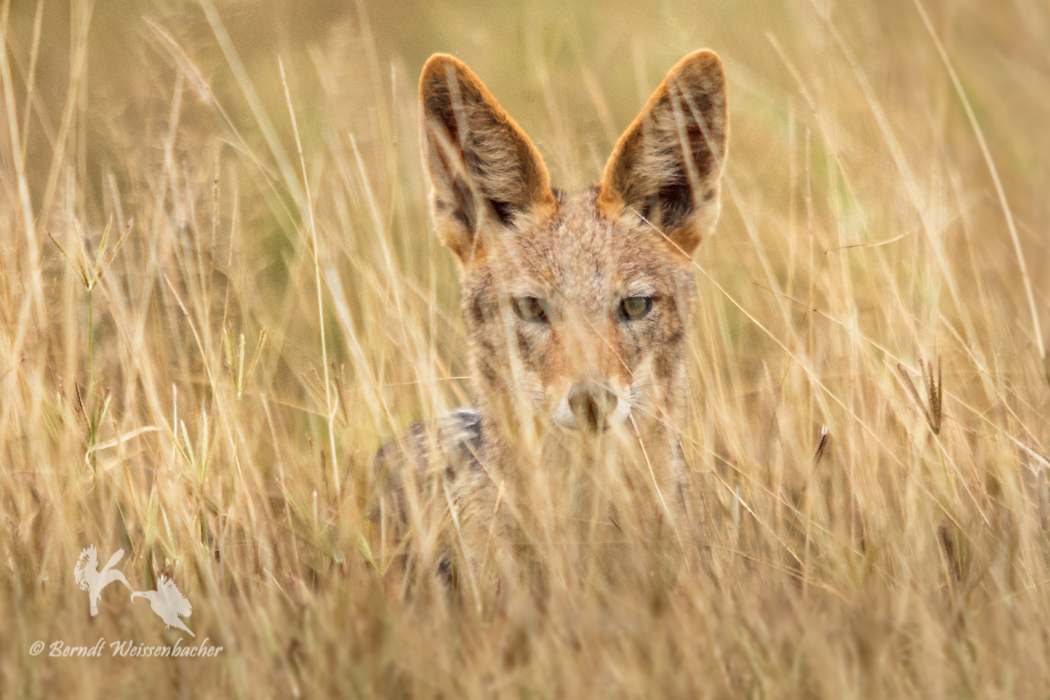
ON PHOTOGRAPHY: Maximising the Odds of Photographic Expression – 1. Being a Black-backed Jackal
At the end of this year (2020), I will have pursued my singular passion for photography for a full five decades. Although my focus as an exclusively environmental photographer (as I call it) is very narrow, I would like to regard myself as a serious photographer first, and then as a crafter of images of the environment, its flora and its fauna.
Sunday, 29 November 2020
A SENSE OF PLACE: A Gem Called Zwartkloof
Whenever I tell people that I am about to spend some time in the bush, their response still bemuses me: “Enjoy the peace and quiet!” ‘Peace’ is a relative term and may be used differently by folks to express very different states of inactivity, calm, tranquillity, lack of conflict or even stress, for example. However, the term ‘quiet‘ is far less abstract and so should mean a similar lack of loud noise, at least to most humans.
Labels:
A Sense of Place,
biomes,
bird photography,
birds,
clouds,
cloudscapes,
environment,
flora,
grasses,
insects,
mammals,
photography,
reptiles,
wildlife photography,
Zwartkloof
Saturday, 28 November 2020
ABOUT THIS IMAGE… ‘ ‘Predator’ on Predator’ and ‘Wild Eye’
Since the vagaries of the
market place ensure that a few select individuals are rewarded for their work
much more handsomely than the majority are, I have been able to afford only
very few longer photographic trips. On only three occasions, I have managed to
spend a significant time in the Kruger National Park, attempting to capture and
express the passion that I feel for this awesome reserve. All three opportunities
were washed out completely – rain or drizzle rinsed the Lowveld clean, every
day, morning and evening, leaving only the midday hours on a few days with
harsh, uninspiring sunlight.
My last wet and grey sojourn
to Kruger took place in February 2017. (This was the last time a long Kruger
trip was hampered by continuous rain, not the last occasion during which the
rain-gods blessed me with an unwelcome present. That happened in March of this
year, on my last pre-lockdown photographic trip.) In 2017, I had planned to
spend sixteen nights in Kruger, for once swapping my favoured northern regions
for an exploration of the central and southern sections of the park.
I was nearing the end of
this marvellous trip, despite the constant heavy rain. I had booked the last
three nights at Pretoriuskop, a camp in the southwestern sector of Kruger, and
one that I had last visited as a very young child. In general, I avoid the
southern regions of Kruger – they are too crowded for my liking. I loathe even
more having to travel long distances between camps, so I was not looking
forward with any glee to the 140 kilometres or so from Satara to Pretoriuskop.
Using the morning hours to travel slowly, to spot, to investigate and to work
any potential sightings photographically, this trip would take a minimum of eight
hours to complete.
So far, the trip had been a
mixed bag of bad lighting, meagre photogenic sightings and, by now, a small,
wet and somewhat musty tent. Worse still, I was heading into an area of the
park that I could remember only vaguely. I would be working for two days in an
environment that I was struggling to previsualise. Nevertheless, I trundled off
down the main tar road towards my next accommodation.
Along the way, I stopped at
the ‘city’ of Tshokwane. Gone was the intimate picnic spot in the bush that I
remember from childhood. Now, several restaurants were vying for the attention
and the tourist dollars/pounds/euros. I fled as quickly as I could squeeze out
a long-overdue personal pit-stop.
I confess that my mood at
this point was sombre to say the least. The crowds, the traffic in southern
Kruger do not agree with this old codger. I rattled on down the tar road. At
midday, as I rolled over a blind rise, I spotted a massive male leopard ambling
along the tar road, also heading south, some 200 metres in front of me. I slowed
down immediately to follow this magnificent beast. I was hoping that he would
soon leave the road so that I could get closer without spooking him. As I
snapped off a record shot through the rain-spattered windshield to show the
folks back home that I indeed had seen a leopard on this trip, I caught a
glimpse in the rear-view mirror of a jeep-jock safari-vehicle motoring over the
rise behind me.
For me personally, these are the worst moments in any game park.
I will always share sightings – after all, all visitors spend time in Kruger or
another game reserve precisely for the unexpected encounters with game. Yet, a
sighting of game ambling along the road inevitably draws a mini-traffic-jam, a
circumstance that I will avoid at all cost.
I could not change lenses
and I was trapped with long focal-length lenses on all cameras. Moreover, game
on a road is not my game as a photographer. Perhaps I could overtake the
leopard slowly and very carefully; then, as he ambled past my window, I could
possibly snap a portrait of this walking cat. Everything worked out according
to plan: I passed the leopard, pulled over to a stop on the opposite side of
the road, switched off the engine and the leopard kept on walking towards me. As
I peered through the viewfinder, I realised I could not get a shot of the head
of the leopard without the road being included in the frame. As he got closer,
I spotted an engorged tick on his lower lip – this was it, this could become
the focus of a very different portrait, not of a leopard, but of a parasite on
a leopard: ‘‘Predator’ on Predator’.
After a single exposure, I fired
the ignition to continue following the leopard. By now, the jeep-jock behind me
had almost caught up. Ahead of me, still at some distance, I saw two more jeep-jocks
pelting towards the leopard from the south. I knew that the leopard would bolt,
so I followed it slowly at some distance. As soon as the safari-crowd pulled
alongside my vehicle and accelerated, the leopard vanished in a streak, off the
high embankment and under a dense thicket of low scrub. The jeep-jock had
overshot the mark in his haste to deliver a leopard to the wildly gesticulating
and very noisy crowd perched atop his vehicle. I pulled onto the oncoming verge
and chose a spot where I could see the entire thicket into which the leopard
had vanished. I used my longest lens to scan the undergrowth for any sign of
the leopard. Very occasionally, I could glimpse through the dense twigs, leaves
and tall grasses, only a few long, white whiskers whenever the leopard yawned.
Obviously, I was swamped by
the inevitable southern Kruger traffic-jam. I could not move my vehicle at all,
so I decided to wait it out as patiently as I could do. If the leopard moved
out of the thicket, I might be able to snap off a shot. I picked a very small
opening in the undergrowth, just in front of the hidden head of the leopard,
pre-focused my lens on this tiny gap, and waited.
After 40 minutes or so of
loud shouts, revving engines and even much hooting, the leopard had had enough.
Suddenly he sat up inside the thicket, still concealed behind impenetrable
twigs, leaves and tall grasses. He must have been a proponent of telepathy; he
must have picked up my loud thoughts of ‘Only one look!’. As if he understood
my mental entreaties, he leant forward and granted me just one momentary glance
with one eye through the tiny aperture in the bush on which I had chosen to
focus, spun around and crashed out of the back end of the thicket.
Gone. Yet he had given me a
special present: a single frame, a single photograph: ‘Wild Eye’.
Since that trip, I have revisited
the southern sections of Kruger on several occasions. The noise, the hubbub and
the traffic – particularly of the jeep-jocks and their safari-crowds from the
countless ‘game lodges’ that border the south of Kruger – still let my hairs
stand on end. Yet the southern part of Kruger – not visited and experienced
since childhood days – has crept into and lodged itself permanently in this old
heart of mine.
Thursday, 26 November 2020
REMINISCENCES: Sojourn in the Mountain-Lands of Kruger
In a previous blog, I mentioned and explained my devotion to the central and northern regions of the Kruger National Park, South Africa. I also pointed out several reasons why I had neglected the southern sections of this magnificent park during the past decades. Yet, following a very brief trip to the southwestern region of Kruger in early 2017, I had vowed to return before long to the previously shunned expanses of the park.
Labels:
animal behaviour,
biomes,
bird photography,
birds,
environment,
flora,
Kruger National Park,
landscape,
mammals,
photography,
predation,
rain,
Reminiscences,
reptiles,
water,
wildlife photography
Tuesday, 24 November 2020
ABOUT THIS IMAGE… ‘The Hunter and the Hunted’
I have a vivid memory from my boyhood days of catching sight in a photography magazine of a dramatic image of a Black-backed Jackal hunting Cape Turtle-Doves at one of the many water holes along the Auob River in the then Kalahari Gemsbok National Park (now the Kgalagadi Transfrontier National Park) in the Northern Cape Province of South Africa. The photograph left an indelible impression on me at the time. The jackal was shown in full flight, jaws wide open, about to snap shut on a turtledove, one of many that had exploded upwards from the waterhole. The drama was captured at just the right moment; no contact had yet been made between hunter and prey, yet the image left no doubt about the inevitable outcome – the turtledove would be snatched despite its frenzied breakaway and the jackal would have its meal.
Sadly, I can not recall the photographer who portrayed this drama (and I apologise for this lapse of memory). Since this iconic instant was captured on slide film (in good light, with appropriate exposure and exceptional composition and drama), countless photographers repeatedly have attempted to recreate this singular image – none has succeeded to get it just right. Inevitably, the numerous published attempts have depreciated some of the uniqueness of the original photograph, yet it remains outstanding and unequalled to this day.
Once glimpsed, many exceptional images are stored away safely in a corner of my mind. I reimagine them repeatedly for their sheer brilliance of circumstance, camera technique and photographic vision. These outstanding achievements act as a constant reminder to myself to up my own game, to refocus and to re-sharpen my own interpretation of selected scenarios in nature and to hone my own personal vision in photography.
Several years ago, I had the good fortune to spend almost two weeks in the Kgalagadi Transfrontier National Park. I avoid copying an image of another photographer at all cost; however, I too felt the need to capture some of the relationship between the Black-backed Jackal and the Cape Turtle-Doves of the Kgalagadi. Despite my relatively short stay at Nossob Camp, I decided to dedicate two full mornings of photography to my own attempt at a different interpretation of the relationship between these hunters and their prey.
On two mornings of the trip, I took up position at a waterhole that I had selected for this task. Other than focussing on my previsualised mini-project, I remained receptive to all of the many interactions happening at this one locality. On both mornings, the low thorn-trees surrounding the waterhole were chockfull with feathered folk. Hundreds of doves descended from the trees onto the rocky rim of the waterhole once a small number of them had scraped up sufficient courage to do so. After settling on the ground, it took only a few jittery individuals, taking off in panic, to trigger a swirl of doves to ascend back into the air, to flail around the waterhole in wide circles and finally to settle down again on the thorn-trees.
Each morning, several individual jackals kept trotting in to the waterhole to quench their morning thirst. A few times, individuals snapped at turtledoves, but only half-heartedly – no jackals showed any determined attempt to start hunting doves. Nevertheless, the time I spent at the waterhole proved fruitful – I managed to capture doves in flight, several other small seedeaters, several portraits of jackals and even lions coming for a drink.
It had never been my intention to copy the image of the jackal hunt of turtledoves that I can recall so clearly from boyhood. I needed to attempt my own photographic summary of this interrelationship between hunter and the hunted. The first morning allowed me to observe the dynamics of the Cape Turtle-Doves and the Black-backed Jackal – how both species acted while on their own and when in the presence of the other. The first morning thus produced images of the Cape Turtle-Doves and the Black-backed Jackal separately – in particular, the difference in appearance and behaviour of individual jackals fascinated me, as did the haphazard explosion of doves from the rim of the waterhole.
By the second morning, I felt confident that I could capture the relationship between the hunter and its prey. I had seen that the turtledoves would lift off en masse whenever a jackal approached the waterhole. I knew that I would not witness a hunt; yet, I had previsualised a scenario where I could possibly snap the portrait of a jackal surrounded by flying doves. With this in mind, I concentrated exclusively on the shenanigans of the turtledoves and the jackals.
After several hours of waiting, a youngish jackal approached the waterhole warily – every time any doves flew up, the jackal would stop. This ideal scenario would allow me to capture my imagined image. I focused continuously on the head of the young jackal and clicked the shutter whenever several turtledoves appeared in the viewfinder around the jackal’s head. In total I took seven exposures – four turned out to be duds because the jackal’s face and eyes were concealed by part of a wing or a body of a dove. Of the remaining three images two had worked really well, but one image, in particular, summarised as closely as possible the image I had dreamt up in my imagination – the much gentler, less tense relationship between ‘The Hunter and the Hunted’.
I did not return to this particular waterhole for the remainder of my stay at Nossob Camp. Instead, I roamed around to capture, whenever possible, other fascinating, awesome and beautiful images of the Kgalagadi.
Subscribe to:
Posts (Atom)


